
Stem Cell Therapy for CRPS (RSD):
A Patient’s Experience After 14 Years of Chronic Pain
Complex Regional Pain Syndrome (CRPS), also known as Reflex Sympathetic Dystrophy (RSD), is one of the most difficult chronic pain conditions to manage.
Patients searching for CRPS treatment options often find that traditional treatments provide only partial relief. As a result, some patients look for regenerative medicine approaches, including stem cell-based approaches — even though these approaches remain experimental.
This article explains the condition, the rationale behind regenerative therapies, and shares the experience of one patient after 14 years of CRPS.
What is Complex Regional Pain Syndrome (Reflex Sympathetic Dystrophy)?
CRPS is a chronic pain condition that typically develops after injury or surgery. The defining feature is a disproportionate and persistent pain response, often far exceeding the original injury.
Common symptoms include:
-
Severe, continuous pain (often described as burning or stabbing)
-
Extreme sensitivity to touch (allodynia)
-
Pain triggered by minimal stimuli (e.g. clothing or bedsheets)
-
Sleep disruption due to pain
-
Changes in skin temperature, color, or swelling
-
Reduced mobility and function in the affected limb
Over time, CRPS can involve central sensitization, where the nervous system amplifies pain signals independently of ongoing tissue damage.
Traditional CRPS Treatments – Chronic Pain & Pain Management
There is currently no universally effective cure for CRPS. The condition is complex and likely involves multiple overlapping mechanisms:
-
Nervous system dysregulation
-
Chronic inflammation
-
Immune system involvement
-
Abnormal pain processing pathways
Standard CRPS treatments focus on symptom management and may include:
-
Pain medications
-
Physical and desensitization therapy
-
Mirror therapy
-
Nerve blocks
-
Spinal cord stimulation
While some patients experience improvement, others continue to suffer from persistent symptoms despite years of treatment.
Stem Cell Therapy for CRPS
Although, at ANOVA IRM, CRPS is not a primary indication we specialize in, many patients with rare disorders reach out to us, seeking stem cell treatment, as conventional medicine often doesn't have satisfactory solutions for them.
With CRPS Stem cell–based approaches, particularly stem cell secretome therapy, are being investigated for their effects on biological processes such as:
-
Inflammation modulation
-
Immune system signalling
-
Cellular communication via growth factors and cytokines
-
Tissue environment and repair mechanisms
These processes are relevant to the biological discussion of chronic pain conditions, including CRPS.
However, it is important to be clear:
-
Stem cell therapy for CRPS is experimental
-
There is no established clinical proof that it treats or cures CRPS
Current use is based on biological plausibility, not definitive clinical evidence.
A CRPS patient’s experience after 14 years
Robert developed CRPS in 2012 following multiple spinal surgeries, including microdiscectomies and a spinal fusion (L4–S1).
His symptoms affected his lower left leg and remained largely unchanged for over a decade.
He describes his condition as:
-
Constant pain, rarely below 5/10
-
Often severe pain, reaching 8–9/10 without treatment
-
A burning sensation, “like being stung by 1000 bees”
-
Severe touch sensitivity
Even minor contact — such as bedsheets — would trigger intense pain, frequently waking him at night.
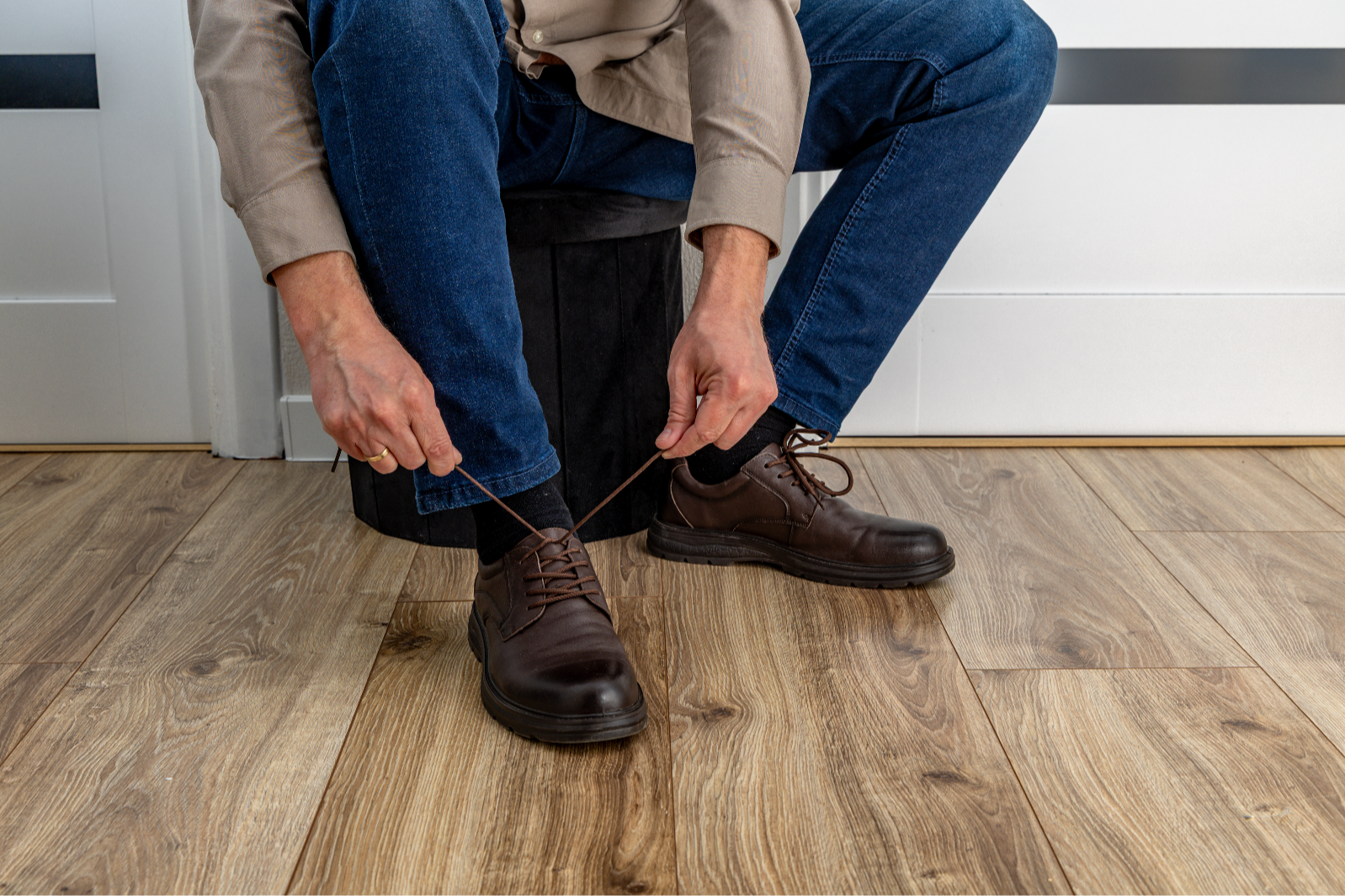
Simple tasks became difficult or impossible. For over 14 years, he was unable to tie his left shoe due to pain.
Previous CRPS treatments
Before exploring stem cell therapy, Robert had tried:
-
Medication-based pain management
-
Desensitization therapy
-
Mirror therapy
-
Mindfulness therapy
-
Capsaicin treatments
-
Regular pain management injections (every two months for 14 years)
These treatments allowed him to function — but did not meaningfully change the condition.
He declined spinal cord stimulation after speaking with other patients who reported poor outcomes and after prior surgeries had worsened his condition.
Robert's observed changes after stem cell therapy
After undergoing treatment with stem cell secretome at ANOVA IRM, Robert reports gradual changes over several months.
Importantly:
-
He is not pain-free
-
CRPS is still present
-
His daily life is still affected
However, certain changes stood out:
-
He can now tie his left shoe for the first time in 14 years
-
Pain during this activity decreased (approx. 7 → 4)
-
Nighttime awakenings from bedsheet contact appear less frequent
-
Touch sensitivity remains, but is sometimes less overwhelming
As he describes it:
“After 14 years of CRPS, I was able to tie my shoe again. That may sound small, but for me it’s significant.”
— Robert, CRPS patient
He adds:
“It still hurts like hell, but perhaps the fires of hell have been dampened.”
Is stem cell therapy effective for Chronic Pain Conditions such as CRPS?
This is the key question — and the honest answer is:
There is currently no reliable evidence that stem cell therapy cures CRPS
Individual cases like Robert’s may report changes, but:
-
Outcomes vary significantly
-
Improvements may be partial
-
Effects may not be permanent
-
Placebo effects cannot be excluded
Robert himself reflects this uncertainty:
“I don’t know if it is permanent relief or not — only time will tell.”
“I have also wondered if it is simply a placebo effect. But I’ll take it if that’s what it is.”
Stem cell–based approaches like secretome therapy are being explored in many conditions where inflammation and altered signaling play a role. CRPS isn’t a standard indication, and there’s no established pathway here — but some patients still decide to explore it, not expecting a reset, but hoping for some kind of shift. Cases like this don’t prove anything in a clinical sense, but they do show something that often gets overlooked: between no change and full recovery, there’s a wide range of outcomes that can still matter. If you are living with CRPS and are considering whether a regenerative approach might be relevant in your case, you can reach out to our team for further information.
Contraindications
Our stem cell treatments are experimental, but we only treat patients for whom we believe the risk/benefit ratio indicates treatment based on the state of the art, i.e., medical, scientific evidence.
Please understand that we therefore do not treat patients for whom the following points apply:
- Active cancer in the last two years
- Not yet of legal age
- Existing pregnancy or lactation period
- Unable to breathe on own, ventilator
- Difficulty breathing in supine position
- Dysphagia (extreme difficulty swallowing)
- Psychiatric disorder
- Active infectious disease (Hepatitis A, B, C, HIV, Syphilis, or other)