

Stem Cell Treatments for Osteoarthritis:
Advancements and Limitations
Stem Cell Treatments for Osteoarthritis: Advancements and Limitations
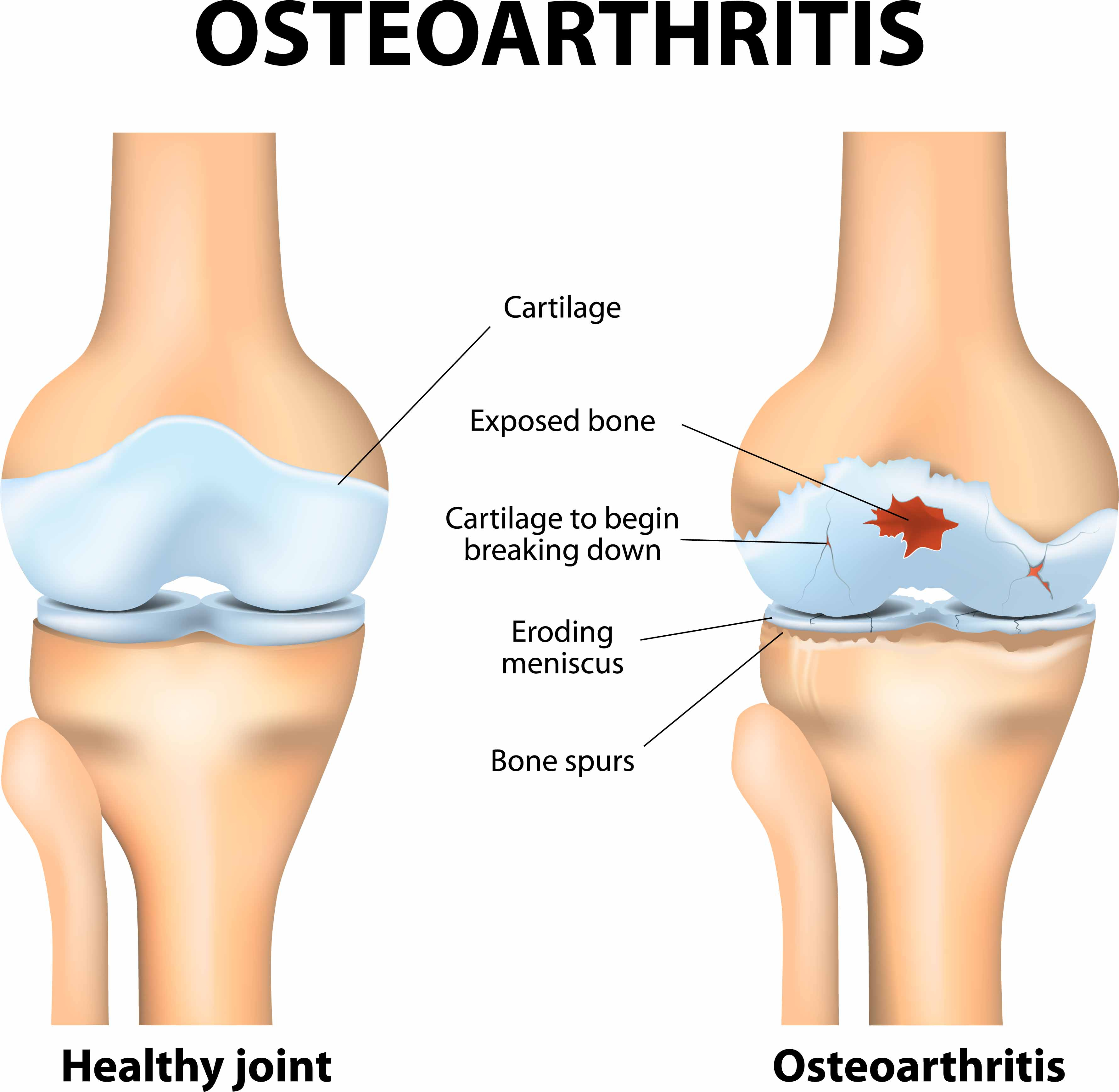
Osteoarthritis is the most common form of arthritis and a major cause of chronic pain and stiffness. It develops when healthy cartilage and its supporting extracellular matrix break down faster than the body can repair them. Over time, the specialized cartilage cells known as chondrocytes become less effective—whether due to aging, prior injury, or sustained mechanical stress—while the collagen framework gradually loses strength and elasticity. As cartilage loss progresses, the joint becomes mechanically irritated, synovial fluid signaling changes, inflammation may increase, and everyday movement can become painful.
Most conventional osteoarthritis treatment options focus on managing symptoms rather than addressing these underlying biological changes. Exercise therapy, weight management, pain medication, and injections such as corticosteroids or hyaluronic acid can provide relief, but they typically do not rebuild cartilage or restore the joint’s collagen structure. When function declines beyond a certain point, orthopaedic surgery, including joint replacement, becomes the standard treatment pathway. For patients who are considering their options before surgery—or for whom surgery is not an ideal option—regenerative medicine is often part of the discussion, including approaches such as Bone Marrow Concentrate (BMC) and MSC-based approaches (MSEC). Stem cell treatments for osteoarthritis are often portrayed online as either miracle cures or as unproven hype. The reality is more measured: current regenerative approaches are not a cure and do not reliably rebuild lost cartilage, but a growing body of scientific research provides a rationale for using them to support the joint environment. This article outlines the regenerative approaches ANOVA works with, explains how they differ biologically, summarizes what the scientific literature reports today, and clarifies who may realistically benefit.
What “Stem Cell Treatment” Means in Osteoarthritis
In everyday marketing, “stem cell treatment” can refer to several different interventions. Clinically, most regenerative approaches rely on adult stem cells and related cell populations, particularly mesenchymal stem cells (MSCs) or MSC-rich mixtures. Embryonic stem cells are not used for OA because of ethical and regulatory constraints, and because clinical protocols focus on well-characterised adult cell sources.
Modern stem cell biology also shapes expectations. In osteoarthritis, the goal is rarely that injected cells permanently turn into new cartilage. Instead, the aim is biological signalling. Research indicates that these cells release factors that may influence inflammatory pathways, synovial fluid chemistry and chondrocyte activity, helping to shift the joint environment toward repair. This microenvironment effect is central to how regenerative approaches are thought to work in osteoarthritis, and may help explain why symptom improvement can sometimes occur even without obvious cartilage regrowth on imaging.
Types of Osteoarthritis Stem Cell Treatment:
Bone Marrow Concentrate (BMC) for Osteoarthritis:
Bone Marrow Concentrate (BMC) is obtained from bone marrow (commonly the iliac crest) and processed to concentrate a broader set of regenerative components. BMC can contain adult stem cells (including MSCs), progenitor cells, immune-modulating cells, and signalling molecules.[1] Rather than replacing cartilage directly, BMC is used to influence the biological environment of the joint. The rationale is to reduce inflammatory signalling, support chondrocytes, and influence extracellular matrix turnover so the joint can function with less irritation. In mild to moderate disease, combined with structured rehabilitation and sensible load management, this approach may help improve pain, stiffness and function. At ANOVA IRM, BMC is the regenerative approach we work with in osteoarthritis: it is autologous, prepared from the patient’s own bone marrow, and applied following careful patient evaluation, sterile processing, and an individualized rehabilitation plan. Individual outcomes vary, and treatment is offered following an individual medical assessment.
MSC-Based Approaches (MSEC) as a Complement to BMC
MSEC (as used here) refers to mesenchymal stem cell–derived approaches, including MSC preparations or MSC-derived secretome approaches, each applied within the applicable regulatory framework. Research suggests that a substantial part of the activity associated with mesenchymal stem cells may be mediated by the factors they secrete—their secretome—which has drawn growing scientific interest for its reported anti-inflammatory and immunomodulatory properties. These approaches are biologically and technically more complex, and correspondingly more costly. They are not always necessary, but may complement BMC where a broader biological signal is sought.
In selected cases—such as high-demand patients, or situations where earlier approaches did not produce sufficient results—a combination of BMC with MSC-based approaches may be considered. The rationale is additive: BMC provides an autologous cell preparation tailored to the patient, while MSC-derived approaches may contribute additional immunomodulatory signalling relevant to the joint environment. ANOVA applies such combinations in selected patients following an individual medical assessment and within the applicable regulatory framework.
BMC and MSEC: How They Differ Biologically
BMC is an autologous preparation containing a mixture of cells and signalling molecules from the patient’s own bone marrow, and it is the regenerative approach ANOVA works with as a first step in osteoarthritis. MSEC refers to MSC-based or MSC-secretome approaches, which are more complex to prepare and are applied within their own regulatory requirements. Both draw on an active field of scientific research. They are used to support the joint environment biologically rather than to rebuild lost cartilage, and the choice between them depends on the individual clinical situation.
Clinical Trials and Systematic Review Results
Evidence comes from clinical trials as well as preclinical work, including animal studies that help clarify mechanisms.[5] In people, reported outcomes depend on disease stage, alignment, activity, and rehabilitation. Several systematic reviews report that stem cell injections may improve pain and function for a period of months compared with baseline or some controls, though results vary and study protocols are heterogeneous. Many of these studies are still relatively small, so the findings are best read as encouraging early evidence rather than proof of efficacy. This is also why clinics should be transparent about limitations, dosing, and follow-up, and should track outcomes over time and document imaging, function scores, and return-to-activity decisions where possible.
In practical terms, the most consistent findings tend to occur in earlier disease, where cartilage is still present.[2] In later stages the mechanical component dominates, and regenerative signalling may not overcome severe structural damage or remove the need for joint replacement surgery.[3][4]
Safety, Benefits, and Risks
Any injection-based approach carries potential risks such as temporary flare, bleeding, infection, or worsening symptoms if activity is not managed. Reported benefits may include improved pain and stiffness, better function, and, in selected patients, the potential to delay orthopaedic surgery. As with any developing approach, individual outcomes vary and cannot be predicted in advance. The main limitation is disease stage: where cartilage is severely depleted and the joint is mechanically unstable, a biological approach is less likely to provide meaningful or lasting benefit, since it does not address the mechanical problem.
Who May Benefit Most
Patients with mild to moderate OA, remaining cartilage, and manageable alignment tend to respond best. Those with a history of injury—such as meniscus damage, a tendon overload pattern, or a prior tear—may also improve when inflammation is reduced and biomechanics are addressed. Rehabilitation, strength, mobility, and a gradual return to activity are an important part of the overall result. Suitability is assessed individually for each patient.
Conclusion
At ANOVA, our osteoarthritis approach focuses on supporting the affected joint biologically and functionally for as long as possible, with the aim of delaying or reducing the need for joint replacement where possible. Current stem cell–based treatments are not a permanent cure, and their effects are typically temporary. Even so, temporary improvement can be clinically meaningful.
By helping to reduce pain, improve joint function, and stabilize the joint environment, regenerative treatments may support mobility and quality of life while preserving time. That time can be valuable—not only for daily functioning, but also because osteoarthritis treatment options continue to evolve, including advances in surgical techniques and regenerative strategies. Any decision should be made individually with a physician, once the established treatment options have been discussed.
News & Insights
References and Literature
- [1] Chahla J et al. Bone marrow aspirate concentrate for the treatment of osteoarthritis J Knee Surg. 2017;30(3):198–205.
- [2] Pas HI et al. Effectiveness of stem cell injections in knee osteoarthritis: a systematic review Arthroscopy. 2017;33(1):e1–e14.
- [3] Shapiro SA et al. A prospective, single-blind, placebo-controlled trial of bone marrow aspirate concentrate for knee osteoarthritis Am J Sports Med. 2017;45(1):82–90.
- [4] Gupta PK et al. Efficacy and safety of adult human bone marrow–derived mesenchymal stem cell therapy in knee osteoarthritis Stem Cells Transl Med. 2016;5(5):667–678.
- [5] Diekman BO et al. Intra-articular delivery of purified mesenchymal stem cells prevents progression of post-traumatic osteoarthritis in mice Arthritis Res Ther. 2013;15(4):R194.
Contraindications
Our stem cell treatments are experimental, but we only treat patients for whom we believe the risk/benefit ratio indicates treatment based on the state of the art, i.e., medical, scientific evidence.
Please understand that we therefore do not treat patients for whom the following points apply:
- Active cancer in the last two years
- Not yet of legal age
- Existing pregnancy or lactation period
- Unable to breathe on own, ventilator
- Difficulty breathing in supine position
- Dysphagia (extreme difficulty swallowing)
- Psychiatric disorder
- Active infectious disease (Hepatitis A, B, C, HIV, Syphilis, or other)