

Stem Cell Therapy for Neurological and Neurodegenerative Diseases
The ANOVA MS Stem Cell Secretome
Treatment Programme Germany
An individualised treatment programme combining autologous, adipose tissue-derived MSC secretome (MSEC) therapy with supportive components, for people living with multiple sclerosis (MS). Offenbach, Germany. Experimental — fully legal — manufactured under German regulatory authorisation and official inspection since 2018.
Multiple sclerosis, also known as encephalomyelitis disseminata, is an immune-mediated disease of the brain and spinal cord. ANOVA IRM manufactures MSEC in its own facility in Offenbach, under official authorisation and officially inspected good professional practice (GFP). GFP is the German counterpart of Good Tissue Practice (GTP) in the US. A registration with the US FDA is, on its own, no official confirmation that the rules are met. In Germany, by contrast, GFP is a condition of the official authorisation and is regularly inspected by the authorities. MSEC is cell-free: it contains the signalling molecules released by the patient's own mesenchymal stromal cells, not the cells themselves. The programme is offered alongside — never instead of — established disease-modifying therapies such as interferons, glatiramer acetate or ocrelizumab.
| Component | Detail |
|---|---|
| Two products | Bone Marrow Concentrate (BMC) and Mesenchymal Stem Cell Secretome (MSEC), each manufactured under official authorisation; no marketing authorisation (experimental) |
| Authorisations | BMC § 20b / § 13 AMG · MSEC § 20b / § 20c AMG (German Medicines Act) |
| Location | Offenbach am Main, Germany |

MS in brief, the programme and its five components — the essentials at a glance.
You are hereIntroduction & Summary
What is multiple sclerosis (MS), in brief?
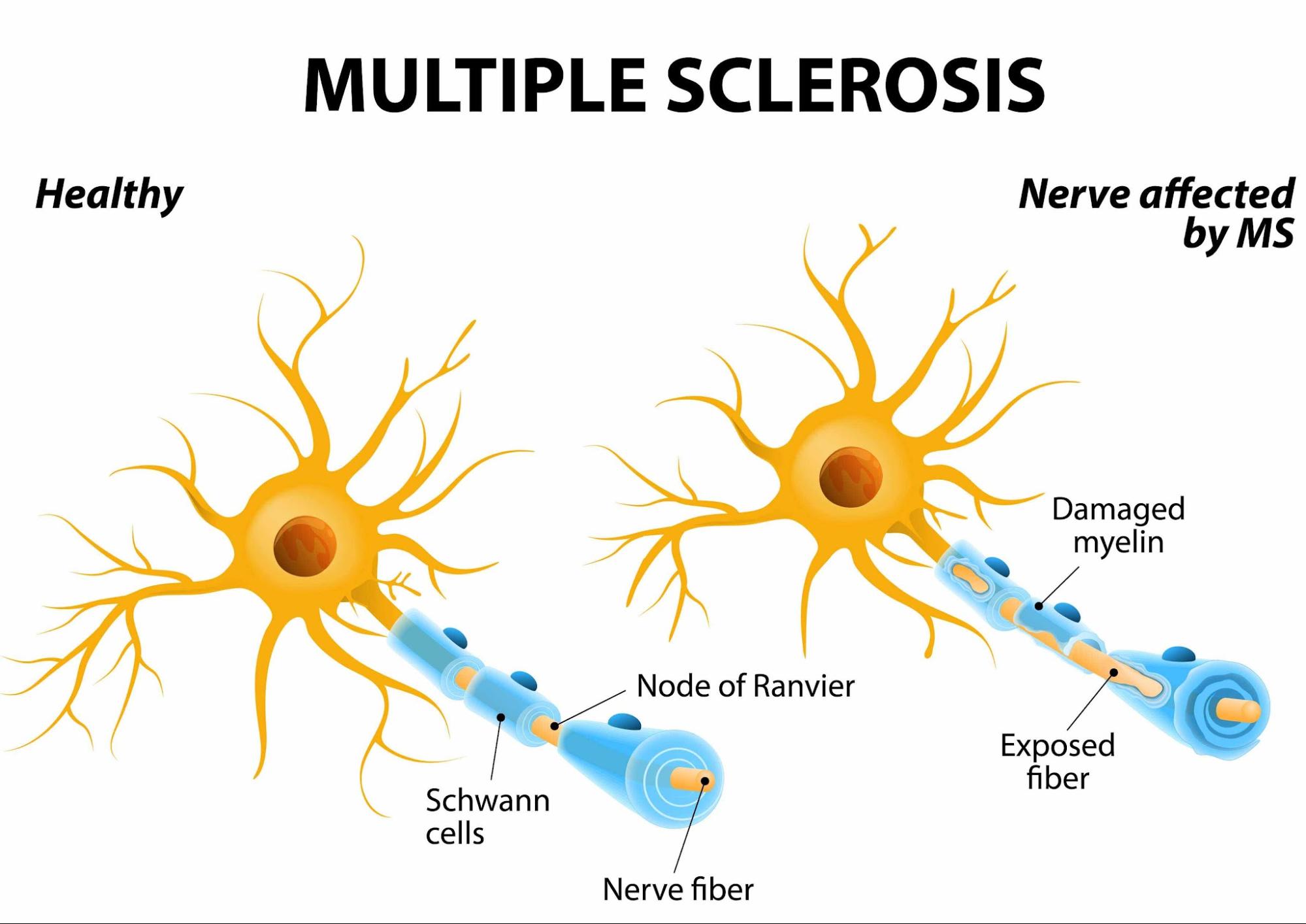
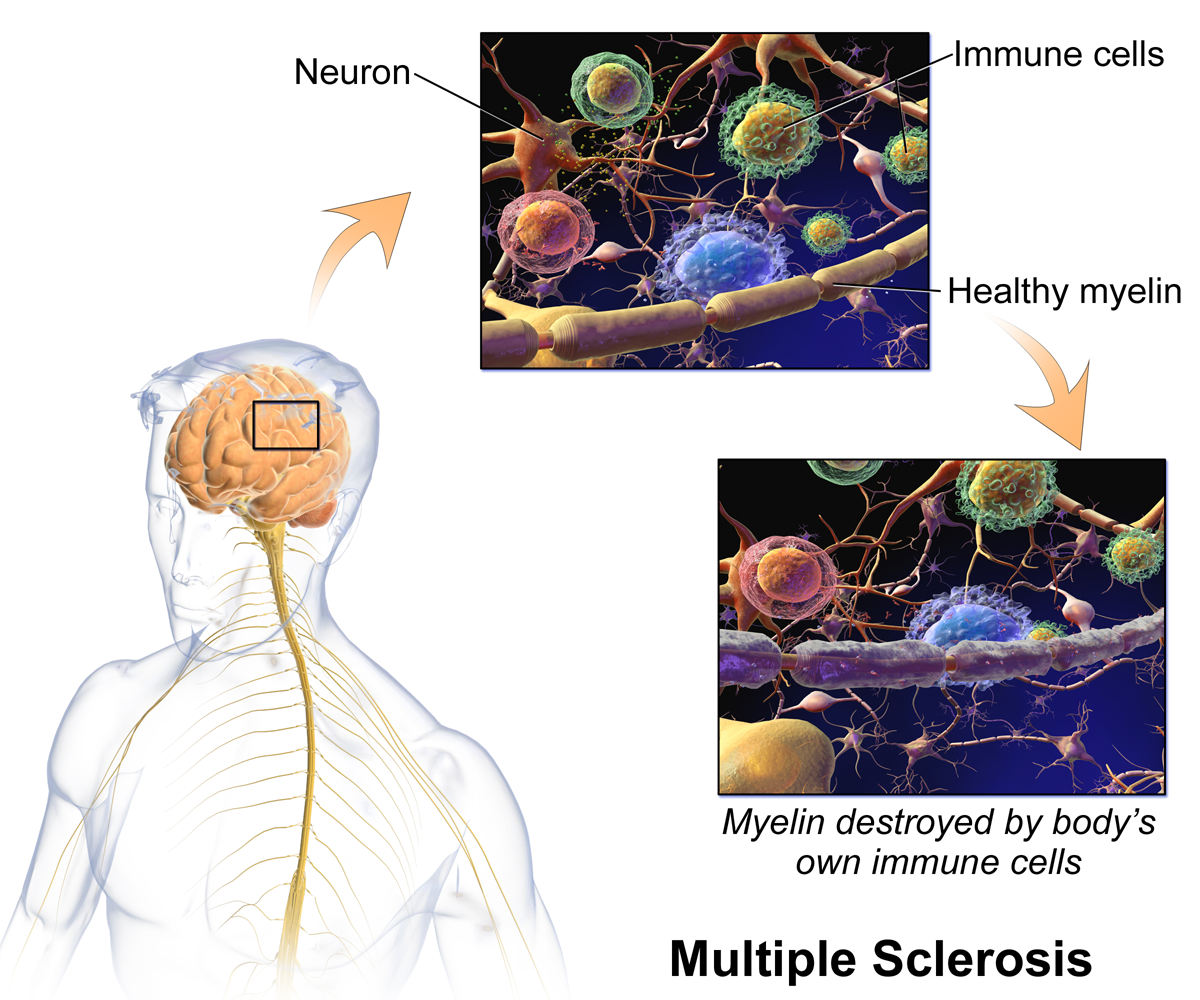
Multiple sclerosis (MS) is a disease of the central nervous system. The immune system attacks the myelin sheath, the protective layer around nerve fibres formed by cells called oligodendrocytes; it works much like the insulation of a cable. Damage to it can disrupt nerve signalling, and symptoms vary widely between patients.
Clinicians distinguish several disease courses: relapsing-remitting MS (RRMS), secondary progressive MS (SPMS), primary progressive MS (PPMS) and a first episode called clinically isolated syndrome (CIS). Diagnosis rests on clinical examination, MRI of brain and spinal cord and, where needed, examination of the cerebrospinal fluid. Disability is usually tracked with the Expanded Disability Status Scale (EDSS). To date no cure is known for multiple sclerosis.
Common symptoms include numbness or weakness in the limbs, unsteady gait and tremor, visual loss or pain on eye movement, double or blurred vision, fatigue, dizziness, speech problems and bladder or bowel symptoms.
More details can be found below in our scientific section on multiple sclerosis.
What is the ANOVA MS programme?
At ANOVA IRM in Offenbach, Germany, we offer an experimental programme for people with MS, alongside their established treatment. Our aim is to slow progression by influencing inflammatory activity; whether the nervous system also repairs itself to a meaningful degree is a question research is still working on. The programme is built around four components — autologous mesenchymal stem cell secretome (MSEC), TUDCA, senolytic therapy and gut microbiome support — and, where appropriate, HAL robotic exoskeleton training as an optional adjunct. As in our ALS programme, the reason for combining several approaches is that no single mechanism is proven: treatment draws on the best available evidence across several biological pathways rather than relying on one.
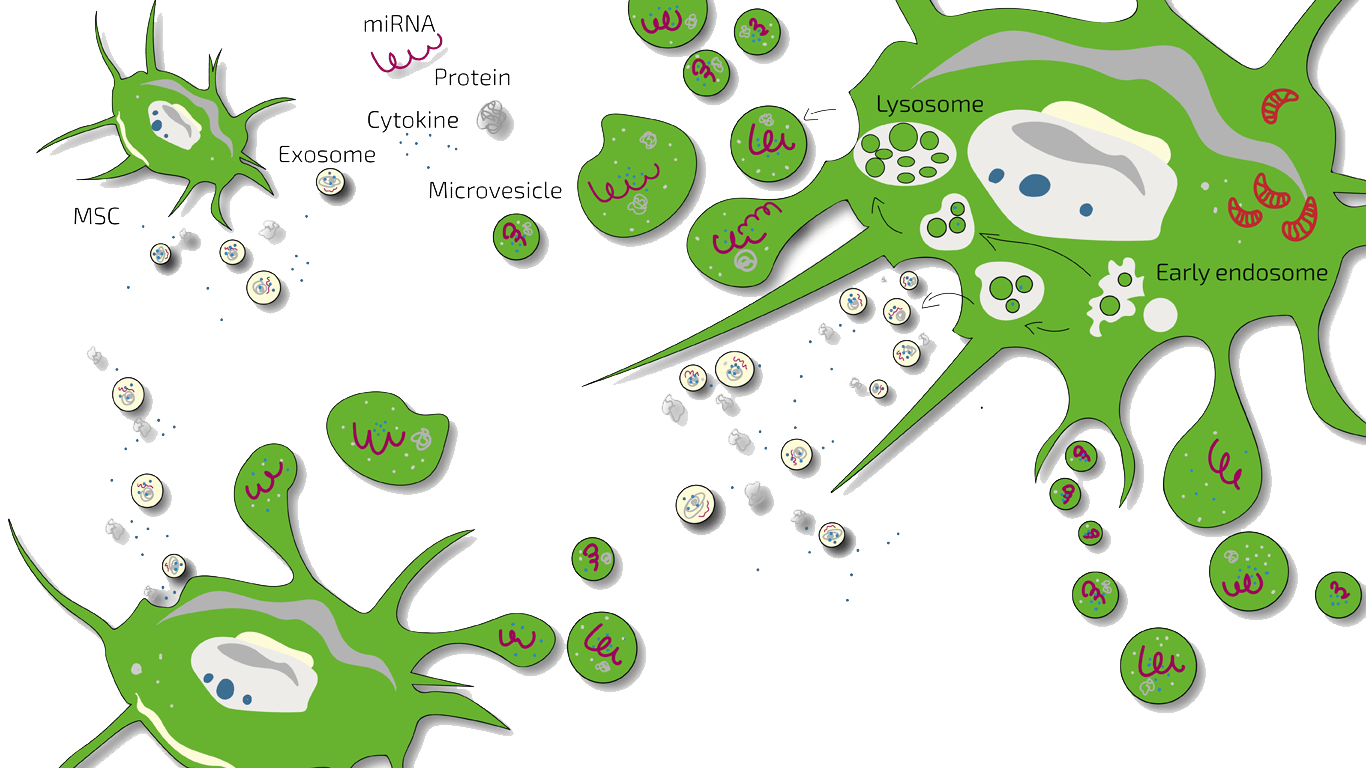
Stem cells are thought to act mainly through soluble factors, together called the secretome, which includes exosomes and many other factors. In diseases in which inflammation plays a central role, MSEC is intended to reduce inflammatory activity and thereby give the tissue room to recover. The other components of the programme are further pathways through which we attempt to influence the disease. What is known about each of them, and what is not, is set out in the clinical and scientific section below.
The ANOVA MS Programme — Components
MSC Secretome (MSEC)
The signalling molecules released by the patient's own mesenchymal stromal cells, given intrathecally into the cerebrospinal fluid. Laboratory and animal studies suggest they may influence immune activity, inflammatory signalling and repair-related responses. Small external phase 1 and phase 2 studies with MSC products in MS mainly examined safety; MSEC itself has not been tested in a clinical trial in MS.
TUDCA (tauroursodeoxycholic acid)
A naturally occurring bile acid under investigation for possible neuroprotective effects; the evidence and why we still use it are set out in the clinical and scientific section below. It is prescribed individually as a pharmacy-compounded preparation (Rezepturarzneimittel) and is not an approved MS treatment.
Senolytic therapy
Intended to reduce senescent (biologically aged) cells, which release inflammatory signalling molecules. In MS, senescent glial cells have been described in lesions; the evidence is preclinical and translational. No senolytic compound is approved for MS, and we do not name individual substances on this website.
Gut microbiome analysis and substitution
Analysis of the gut–brain axis, with personalised dietary or probiotic advice where clinically indicated. External studies report differences in the gut microbiome of people with MS; that changing it influences the disease has not been proven by clinical studies.
HAL robotic exoskeleton training (optional)
A robotic leg exoskeleton driven by the patient's own residual muscle signals. In a small external pre-post study in 13 people with MS, a two-month course of lower-limb HAL training improved step length, knee range of motion and EDSS scores; there was no control group.[23] A systematic external review describes HAL gait training across neurological conditions.[24] An optional adjunct for ambulatory patients, not a substitute for the components above.
Which diagnostics do we use for MS at ANOVA IRM?
Which tests are used to diagnose MS?
MRI of the brain and spinal cord is the central imaging test in MS, and contrast agent shows which lesions are currently inflamed. Diagnosis follows the McDonald criteria and, where needed, examination of the cerebrospinal fluid for oligoclonal bands; evoked potentials and blood tests to rule out other causes may be added. Disability is tracked with the EDSS.
What do we review before MS treatment at ANOVA IRM?
Before any treatment decision we review your neurological findings, your MRI images and reports, your EDSS score and your current disease-modifying therapy. Where relevant we add gut microbiome analysis.
- Standard: an MRI of the abdominal wall to exclude a hernia is required before the liposuction, taken no more than four weeks beforehand. It can be done at home or at ANOVA IRM.
- Optional: CT guidance for the intrathecal application at ANOVA IRM, used while the dose is given.
- Optional: further MRI scans, with or without contrast, where your MS situation calls for them — for example to reassess lesion activity or to follow up another finding.
Imaging can be carried out in-house. The full diagnostic pathway is described on our diagnostics page.
Why ANOVA IRM for MS?
ANOVA IRM has manufactured MSEC under German regulatory authorisation and official inspection since 2018. Why an autologous tissue preparation used only for our own patients requires no marketing authorisation is explained on our regulatory status page. Standard care comes first: disease-modifying therapies, physiotherapy, rehabilitation and symptom-focused treatment remain the basis, and MSEC is offered in addition to them.
What can you expect as an MS patient?
Initial evaluation can begin remotely, by phone or video, without travel to Germany. Treatment itself requires an in-person visit to Offenbach am Main, less than 20 minutes from Frankfurt Airport. You receive an individual written cost estimate before any treatment decision.
Quick answers
Is there a cure for multiple sclerosis (MS)?
No. There is currently no cure for MS. Standard care combines disease-modifying therapies, relapse treatment, physiotherapy, rehabilitation and symptom-focused care. In some aggressive relapsing forms, autologous haematopoietic stem cell transplantation (aHSCT) is also used; beyond this, experimental approaches such as MSC secretome (MSEC) are being explored.
Does stem cell therapy cure multiple sclerosis (MS)?
No. Stem cell therapy is not a cure for MS. The use of MSEC at ANOVA IRM aims to influence immune activity and support nerve tissue, alongside — never instead of — disease-modifying therapy.
Is MS stem cell therapy legal in Germany?
Yes, provided the provider holds the required official authorisations. ANOVA IRM manufactures MSEC under a procurement authorisation (Section 20b AMG) and a manufacturing authorisation under Section 20c AMG, and gives it as an individual treatment attempt. The full derivation is on our regulatory status page.
Is MS stem cell therapy safe?
Not without qualification: like any medical treatment it carries risks, which your doctor discusses with you in detail before treatment. Safety also depends on the quality of the product: following the logic of the medicines authorities, a secretome manufactured under official authorisation and inspection is to be regarded as safer than an unregulated one. Ask any provider which authorisations and certificates it holds. What the authorities warn about is set out on our page about unproven therapies.
What medication is used for multiple sclerosis (MS)?
Disease-modifying therapies are the standard medication for MS, for example interferons, glatiramer acetate, dimethyl fumarate, natalizumab or ocrelizumab, chosen according to the disease course. MSC secretome (MSEC) at ANOVA IRM is offered as a complement to this medication, not as a replacement.
Who qualifies, what the process actually involves, and what it costs — step by step.
You are hereMS Treatment: Eligibility, Process & Cost
MSEC treatment for MS at ANOVA IRM costs approximately €20,000–€36,000, depending on the number of doses used. It requires a two-day outpatient visit to Offenbach, Germany, for tissue collection, followed by further visits for the applications according to your individual treatment plan. It is available to people with early-to-mid stage MS after individual medical review.
What does the MS treatment timeline look like?
- 01
Initial evaluation
Remote, by phone or video — typically 2 weeks to a few months
- 02
Preliminary screening
In your home country, to avoid an unnecessary journey
- 03
First visit — bloodwork and tissue collection
Two-day outpatient visit to Offenbach: bloodwork first, then — if the results are in order — mini-liposuction under brief sedation
- 04
Production and quality control
Approximately 4 weeks; yields 10 doses per production cycle
- 05
Storage
Up to 2 years, allowing an extended personalised schedule
- 06
Application schedule
Set individually: two doses at the start, then one dose every 4–6 weeks, or two doses every 3 months
Who qualifies for MS treatment, and what are the requirements?
We treat people with early-to-mid stage MS in whom the treating physician considers the benefit-risk balance to support treatment. Every treatment recommendation follows a full clinical evaluation. Patients who may be considered include those with:
- Early-to-mid stage multiple sclerosis
- Relapsing-remitting MS, primary progressive MS or secondary progressive MS, where medically appropriate
- Persistent MS symptoms, functional limitations or disease activity despite standard care
- Medical suitability for light sedation and adipose tissue collection via mini-liposuction
- The ability to breathe independently and comfortably while lying down
- The ability to travel to Offenbach, Germany, for evaluation and treatment
Applying for an evaluation does not mean that treatment will be offered.
What are the contraindications for MS treatment?
Our treatments are experimental. We treat only people for whom, after medical assessment, we consider the benefit-risk balance to support treatment.
Applies to all ANOVA treatments:
- Active cancer within the last two years
- Under the age of legal majority
- Pregnancy or breastfeeding
- Active infectious disease (hepatitis A, B, C, HIV, syphilis or other)
Specific to MS:
- Unable to breathe unaided, or requiring a ventilator
- Difficulty breathing in the supine position
- Dysphagia (severe difficulty swallowing)
- Psychiatric disorder that would prevent informed consent or cooperation
What does MS therapy at ANOVA IRM involve, step by step?
What screening is needed before you travel for MS treatment?
Before you travel, a preliminary screening in your home country — usually a blood test for medical or infectious-disease factors that would prevent treatment — helps you avoid an unnecessary journey.
What happens at your first MS visit to Offenbach, Germany?
The first treatment visit takes about two days in Offenbach, on an outpatient basis. It begins with bloodwork at ANOVA IRM; if the results are in order, a small amount of abdominal fat tissue is collected by mini-liposuction under brief sedation. From this point to the first secretome application is usually four to six weeks.
How is your MSEC for MS produced and quality-controlled?
Mesenchymal stromal cells are isolated from the collected tissue and expanded under controlled conditions in our own facility in Offenbach, under official authorisation and officially inspected good professional practice (GFP). These cells are then used to produce your MSEC preparation — the signalling molecules they release, not the living cells. Production and quality control take approximately four weeks and yield 10 doses per production cycle. Each patient batch is tested with methods validated according to the European Pharmacopoeia (Ph. Eur.) and GMP, and released under a documented procedure; the released secretome is stored at −80 °C and keeps for up to two years.
How often is MSEC applied in MS?
MS is a chronic disease that often progresses over time, and there is currently no cure. We therefore recommend a longer-term treatment using all 10 doses produced rather than a single application; see the timeline above.
The schedule is set individually for each patient, for example:
- At the start: two intrathecal doses.
- If you live close by: a single MSEC dose every 4 to 6 weeks.
- If you live further away: a double dose every 3 months — about five visits over 15 months for the 10 doses produced.
- Standard route for MS: intrathecal, by lumbar puncture into the cerebrospinal fluid. This is intended to bring the secretome closer to the spinal cord and brain than an infusion into the bloodstream, which would have to cross the blood–brain barrier.
- Individual alternative: intravenous, if you specifically wish it or if systemic treatment is medically necessary.
Intrathecal applications are standard procedures when performed by experienced physicians; where the anatomy requires it, ANOVA IRM uses CT guidance from its in-house radiology. The benefit-risk assessment of intrathecal administration is set out on a separate page.
What does MS treatment with MSEC cost?
MSEC treatment for MS costs approximately €20,000 to €36,000 and is billed according to the German Medical Fee Schedule (GOÄ). The base package — the mini-liposuction and the first three MSEC doses — costs approximately €20,000; each further dose is charged separately at approximately €2,250 to €2,350 depending on the application route. Because we recommend using all 10 doses over a longer period for a chronic disease such as MS, most treatment plans end up at the upper end of this range. The total also depends on additional examinations, diagnostics and your sedation preferences. You receive an individual written estimate before any treatment decision. What drives the cost of stem cell treatment in general is explained in our blog post on treatment cost. Travel, accommodation and other personal expenses are separate. Experimental MS treatment is generally self-funded; you can still ask your insurer about possible reimbursement. All prices are subject to change.
Because MS is a chronic disease, a double liposuction can be recommended: it yields 20 doses, which can be used over the current shelf life of two years from a single collection. The cost is correspondingly higher and is shown in your individual estimate.
Why does the cost of MS treatment vary with the application route?
All treatments at ANOVA IRM are billed according to the German Medical Fee Schedule (Gebührenordnung für Ärzte, GOÄ); within it, the cost varies mainly with the route of application. For MS we mainly administer MSEC intrathecally, because in our assessment it is most likely to act there: the cerebrospinal fluid is a small, closed compartment in direct contact with the spinal cord and brain. We use intravenous administration only if you specifically wish it or if systemic treatment is medically necessary. The exact cost of your treatment plan is set out in your individual written cost estimate.
Frequently asked questions — eligibility, process and travel
Which types of MS may be considered for treatment?
Relapsing-remitting MS (RRMS), primary progressive MS (PPMS) and secondary progressive MS (SPMS) may be considered where medically appropriate. Eligibility is not based on the type alone: disease stage, symptoms, current therapies, overall health and the ability to travel are reviewed as well.
How is MSEC administered for multiple sclerosis (MS)?
By intrathecal injection via lumbar puncture into the cerebrospinal fluid. Treatment starts with two doses. If you live close by, a single dose every 4 to 6 weeks is usual; otherwise a double dose every 3 months.
How long does the whole MS process take?
Initial evaluation can begin remotely and takes from about two weeks to several months. Tissue collection takes about two days in Offenbach, followed by approximately four weeks of production and quality control.
Does health insurance cover MS stem cell therapy in Germany?
No. Health insurance does not usually pay for experimental MS treatment, so patients fund it themselves; an individual request to your insurer is possible but rarely successful.
Should I stop my current MS medication such as interferons, glatiramer acetate or ocrelizumab?
No. The programme complements guideline-based care. Please continue to work with your treating neurologist throughout.
Should I continue my existing MS treatment such as interferons, glatiramer acetate or ocrelizumab?
Yes. The programme complements established neurological care rather than replacing it.
How often do I need to travel to Germany for MS stem cell treatment?
Usually about five times over 15 months. After a remote first evaluation, one two-day visit to Offenbach is needed for bloodwork and tissue collection. Applications then follow every 4 to 6 weeks as a single dose if you live close by, or otherwise as a double dose every 3 months. Offenbach is less than 20 minutes from Frankfurt Airport. The full sequence is described on the MSC secretome page.
What medical records should I send for an MS assessment?
Please send us your most recent documents; we will ask if we need anything else. Helpful are, for example, your neurologist's letters with the confirmed diagnosis, MRI reports and images of brain and spinal cord, CSF findings if available, your latest EDSS score, relapse history and a current medication list. Large image files can be sent electronically; our patient care team will tell you how.
Does ANOVA IRM treat international patients with MS?
Yes. Patients from other countries can be advised in English, and your MS is first assessed by phone or video, before you need to travel.
MS biology, standard of care, the rationale behind each component and all references.
You are hereMS: Clinical & Scientific Evidence
1. What happens in multiple sclerosis (MS)?
MS involves several interacting mechanisms: immune dysfunction, neuroinflammation, damage to myelin and possible injury to the axons themselves. These processes contribute to attacks on the myelin sheath, which can disrupt nerve signalling.[2],[3]
Clinicians distinguish relapsing-remitting MS (RRMS), secondary progressive MS (SPMS) and primary progressive MS (PPMS); a first demyelinating episode is called clinically isolated syndrome (CIS). Diagnosis follows the McDonald criteria, which require dissemination in space and in time. MRI with gadolinium shows contrast-enhancing lesions during active inflammation, alongside T2 and FLAIR lesions in typical locations — periventricular, juxtacortical, infratentorial and spinal. Cerebrospinal fluid analysis looks for oligoclonal bands and an elevated IgG index; evoked potentials (visual, somatosensory, motor) and optical coherence tomography can add information. Disability is tracked with the EDSS, and neurofilament light chain (NfL) is studied as a marker of neuroaxonal damage.
Scientific research into stem cell-based therapies for MS has explored immune modulation, neuroinflammation, neuroprotection of affected nerve tissue, cell survival and repair-related signalling, remyelination and support of injured axons.[2],[11]
What causes MS, and what are the risk factors?
The causes of MS are not known. The immune system attacks the body's own tissue, in this case the nerve fibres, and researchers assume a combination of environmental factors and genetic predisposition. The underlying mechanism is thought to be either immune-mediated destruction or a failure of the myelin-forming cells.
- Age: MS can begin at any age, but often starts between 20 and 40.
- Sex: women develop relapsing MS two to three times more often than men.
- Family history: the risk is higher if a parent or sibling has MS.
- Certain viral infections: some viruses, among them Epstein-Barr, have been linked to MS.
- Ethnic background: white people are at higher risk; people of Asian, African or indigenous descent at lower risk.
- Vitamin D: low vitamin D levels or low sun exposure are associated with a higher risk.
What drives the progression of MS?
The cause of MS is unknown, and the drivers of progression are a separate question. Inflammatory attacks on the myelin sheath, mediated by immune cells, damage nerve fibres; over time, processes within the nervous system — including glial activation and axonal loss — contribute to progression independently of relapses.[2],[3]
This is where our programme aims — at the course of the disease, not at its cause, and not at a cure.
2. What is the guideline-based standard of care for MS?
Disease-modifying therapies (DMTs) are the basis of MS treatment. They work by immunosuppression or immunomodulation and are combined with relapse therapy, physiotherapy, rehabilitation, muscle relaxants including cannabinoids, and symptom-focused care. These can reduce inflammatory disease activity, slow progression, manage relapses and support quality of life. They often do not fully restore lost neurological function or repair damage that has already occurred. That gap is what MSEC research is exploring; it does not replace standard care.
How is MS diagnosed, and what do we not do ourselves?
The diagnosis of MS is made by neurologists, not by us. The standard work-up includes clinical examination, MRI of brain and spinal cord with contrast, examination of the cerebrospinal fluid for oligoclonal bands, evoked potentials where needed, and blood tests to exclude other causes. Assessment follows the McDonald criteria, and disability is tracked with the EDSS.
What we do ourselves is imaging: MRI with or without contrast, and CT guidance for an intrathecal application. This is carried out at the Institut für Bildgebende Diagnostik in the same building, which also belongs to Dr. Stehling. We do not perform lumbar puncture for diagnosis, evoked potentials or the neurological diagnosis itself; please bring these findings from your neurologist.
3. What is the scientific rationale for MS treatment, component by component?
MSC secretome (MSEC)
Modern stem cell concepts for MS are not based on replacing damaged nerve cells. Research focuses on mesenchymal stromal cells and the molecules they release, which may communicate with surrounding cells and tissues — often described as paracrine signalling.[1],[4],[10]
Stem cells and their secretome may communicate with immune cells involved in inflammation.[9] In MS this matters because immune overactivity contributes to the attack on myelin. The secretome contains growth factors, cytokines, proteins, miRNAs, exosomes and microvesicles.[12],[13]
Small external phase 1 and phase 2 studies with MSC products in MS mainly examined safety and reported acceptable tolerability.[5],[6] A randomised placebo-controlled phase 2 trial did not show a clinical benefit.[7] MSEC itself has not been tested in a clinical trial in MS.
Observations reported in those small early studies included less inflammation, improvements in vision and reaction times, and an increased optic nerve cross-section. They also included fewer new lesions, a smaller lesion area and lower relapse rates compared with patients on anti-inflammatory medication alone.[5],[6],[8] These are observations from small early trials, not proof of efficacy; no serious side effects were reported in these studies.
What is the efficacy hypothesis behind MSC secretome in MS?
In MS, immune overactivity drives the attack on the myelin sheath, and glial cells maintain inflammation within the nervous system. The hypothesis is that the soluble factors of the secretome influence this environment: immune activity, inflammatory signalling and the survival of the cells involved.[1],[10],[12],[13]
Two limitations belong with it: the effect of MSEC on the course of MS has not been shown in a controlled trial, and the cause of MS remains unknown. Our aim is to slow progression, not to cure the disease.
TUDCA
TUDCA is a naturally occurring bile acid studied for neuroprotective properties, among them stabilisation of mitochondrial membranes, reduced oxidative stress and anti-inflammatory effects. In MS, altered circulating bile acid metabolites have been described compared with healthy controls, most pronounced in progressive forms, and bile acid receptors have been identified in MS lesions.[14]
An external randomised double-blind trial of TUDCA supplementation in progressive MS (59 people enrolled, 16 weeks) found no difference in adverse events compared with placebo. It produced the expected changes in bile acid metabolism, while clinical and fluid biomarker outcomes did not differ. It was not designed to test clinical efficacy, so whether TUDCA changes the course of MS remains open.[15]
Why do we still use TUDCA? Talk to us about it.
Cellular senescence and senolytics
Senescent cells stop dividing but continue releasing inflammatory signalling molecules, and their accumulation is linked to chronic inflammation and impaired tissue repair. In MS, senescent glial cells including microglia have been identified in lesions and are hypothesised to drive chronic neuroinflammation, impaired clearance of myelin debris and failure of remyelination, particularly in progressive MS.[16],[17],[18]
Several external reviews propose senolytic and senomorphic compounds as a possible add-on strategy alongside immunomodulatory and remyelination-promoting therapies. No senolytic compound has completed an MS-specific clinical trial; the evidence base is preclinical and translational.[16],[19]
Gut microbiome
The gut–brain axis is one of the more developed areas of MS research. External studies report gut microbial dysbiosis in people with MS compared with healthy controls, including large multi-cohort studies that identified reproducible microbial signatures.[20],[21]
An external twin study in 2025 transplanted gut bacteria into germ-free mice. Bacteria from the MS-affected twin could trigger MS-like disease, bacteria from the healthy twin could not.[22] ANOVA IRM offers microbiome analysis as part of the individual assessment, which may inform dietary or probiotic strategies. Findings in this area remain associative more often than mechanistic, and no probiotic or dietary intervention is established as an MS treatment.
HAL robotic exoskeleton training
HAL is a wearable exoskeleton driven by the patient's own residual muscle signals. In a small external pre-post study in 13 people with MS, a two-month course improved step length, knee range of motion and EDSS scores, without a control group.[23] A systematic external review describes its use for gait training in neurological conditions.[24] The evidence is preliminary; HAL addresses gait and balance, not the disease process.
Talk to us about current changes or additions to the programme. For a number of conditions ANOVA IRM also offers infusion therapies alongside the components described above.
4. Where does our own MS evidence stand?
We have no evaluated dataset of our own for MS yet. We monitor the patients we treat, and the monitoring data will be added here once the analysis is complete. What we can say about MSEC in MS therefore rests on the published literature and on the rationale described above. Individual accounts from patients are collected in our testimonials; they are personal reports, not outcome data.
Stem cell-based therapy for MS remains experimental, and outcomes vary from patient to patient. Treatment goals are reviewed individually and should not be understood as guaranteed results. Potential goals or monitoring areas may include immune modulation and inflammatory activity, protection of nerve tissue and cell survival, new lesion or relapse activity, and vision-related measures, symptoms and quality of life. Repair of damaged tissue is what research in this field hopes for; it is not something we can promise today.
Treatment cannot guarantee remyelination, disease stabilisation, symptom relief, relapse reduction or reversal of existing neurological damage.
What is the realistic goal of MS treatment?
The primary aim of current therapies for neurodegenerative disease is to slow progression, not to reverse damage that has already occurred. That is true for established MS treatments and for experimental approaches such as MSEC. In MS some symptoms can improve under treatment, particularly during periods of reduced inflammatory activity, but slowing the pace of decline remains the central goal.
Current treatment options can be thought of as a bridge: the aim is to preserve as much function as possible while research advances. Research into MS continues, supported in part by AI-driven tools used for biomarker discovery, prediction of disease progression and drug development. No one can honestly promise a date for a cure.
5. Legal framework for MSEC in MS
MSEC is an autologous tissue preparation. ANOVA IRM manufactures it under a procurement authorisation (Section 20b AMG) and a manufacturing authorisation under Section 20c AMG, issued and regularly inspected by the Hessian State Office for Health and Care (HLfGP). The individual treatment attempt (individueller Heilversuch) concerns the administration only and follows full disclosure and informed consent. Because the product is used only for ANOVA IRM's own patients, no authorisation under Section 4b, no marketing authorisation under Section 21 and no approval under Section 21a AMG is required. The full derivation is on our regulatory status page.
6. Frequently asked questions — multiple sclerosis (MS), evidence and approval status
Is stem cell therapy approved for multiple sclerosis (MS) anywhere?
Not as a marketing authorisation for an MSC or secretome product. One cell-based procedure, autologous haematopoietic stem cell transplantation (aHSCT), is established in selected aggressive cases of relapsing-remitting MS and is covered by clinical guidelines; it is a different treatment from MSEC.
How is MSEC different from aHSCT for multiple sclerosis (MS)?
aHSCT is an established, far more aggressive treatment. It uses immunoablative chemotherapy to deplete the immune system, followed by reinfusion of the patient's own blood-forming stem cells to rebuild it. For selected aggressive, treatment-resistant RRMS it has trial evidence and formal clinical guidelines (EBMT/ECTRIMS, US National MS Society). MSEC is categorically different: non-ablative, without chemotherapy conditioning, from adipose-derived rather than blood-forming cells, cell-free and investigational. The two are not interchangeable.
Are MSC studies evidence that MSEC works in multiple sclerosis (MS)?
No. They provide a scientific rationale and indirect evidence, not proof. Proof of efficacy requires a randomised controlled phase 3 trial with the specific product; no such trial exists for MSEC. The reasoning behind a cell-free product is set out on the MSC secretome page.
What type of stem cell therapy does ANOVA use for multiple sclerosis (MS)?
An autologous MSC secretome (MSEC) produced from the patient's own mesenchymal stromal cells. The final preparation is cell-free.
How common is multiple sclerosis (MS)?
An estimated 2.8 million people live with MS worldwide, about 36 per 100,000 population, and women are affected about twice as often as men.[25] MS usually begins between the ages of 20 and 40, and women develop the relapsing form two to three times more often than men. Most people start with a relapsing-remitting course; 10 to 20 per cent have a primary progressive course.
What are the symptoms of multiple sclerosis (MS)?
Typical symptoms of MS are numbness or weakness in the limbs, visual disturbances such as optic neuritis, fatigue and muscle stiffness. MS causes a wide range of symptoms, which makes it hard to recognise early. Symptoms differ from person to person and can change over time, because different nerve fibres may be affected.
Movement-related symptoms
- numbness or weakness in the limbs, often on one side
- tremor and problems with coordination, including an unsteady gait
- unpleasant electrical sensations on certain neck movements, especially bending forward (Lhermitte's sign)
- tingling or pain in different parts of the body
Vision-related symptoms
- loss of vision in one eye, often with pain on eye movement (optic neuritis)
- prolonged double vision
- blurred vision
Other symptoms
- fatigue and dizziness
- muscle stiffness and spasms (spasticity)
- speech problems
- effects on sexual function, continence and bowel function
Which forms of multiple sclerosis (MS) are there, and how does it progress?
The four forms of MS are CIS, RRMS, PPMS and SPMS, and the classification uses the course so far to estimate the likely course ahead. That matters for prognosis and for the choice of therapy.
- Clinically isolated syndrome (CIS): a first episode suggesting demyelination that does not yet meet the criteria for MS.
- Relapsing-remitting MS (RRMS): unpredictable relapses followed by periods of remission, in which symptoms recede partly or fully. Most people start with this form.
- Primary progressive MS (PPMS): affects 10 to 20 per cent. Function declines continuously from the start, with little or no remission.
- Secondary progressive MS (SPMS): develops in at least half of those who start with a relapsing course. Neurological function declines between relapses, with occasional relapses or slight improvements.
What complications can multiple sclerosis (MS) cause?
MS can lead to further complications, among them paralysis, epilepsy, muscle stiffness and spasms, and memory problems, mood changes, depression and other mental health effects.
Important Pages
Questions people usually ask next. Each is answered in full on its own page.
- Who are we?
- Is ANOVA legal?
- Is stem cell therapy safe?
- What is MSC secretome (MSEC)?
- What is BMC (Bone Marrow Concentrate)?
- What are stem cells?
- What should I ask when looking for a stem cell treatment?
- Which conditions do we treat?
- Benefit-risk assessment of intrathecal administration
- Does the secretome pass the blood–brain barrier?
- HAL robotic exoskeleton training
- Multiple Sclerosis: How Stem Cells Could Help
- The ANOVA ALS/MND programme
Affiliations of ANOVA
ANOVA IRM shares its premises in Offenbach with two further institutions owned by Dr. Stehling: the Institut für Bildgebende Diagnostik (IBDO), providing MRI and CT imaging, and the Vitus Prostate Center. Because imaging is carried out in the same building, condition-specific diagnostics — including CT-guided procedures — can be performed in-house rather than referred elsewhere. See diagnostics at ANOVA IRM.
References — MS-specific literature
- [1] Caplan AI. Adult mesenchymal stem cells for tissue engineering versus regenerative medicine. J Cell Physiol. 2007;213(2):341–347. doi:10.1002/jcp.21200. PMID: 17620285.
- [2] Martino G, Franklin RJM, Baron Van Evercooren A, Kerr DA; STEMS Consensus Group. Stem cell transplantation in multiple sclerosis: current status and future prospects. Nat Rev Neurol. 2010;6(5):247–255. doi:10.1038/nrneurol.2010.35. PMID: 20404843.
- [3] Trapp BD, Peterson J, Ransohoff RM, et al. Axonal transection in the lesions of multiple sclerosis. N Engl J Med. 1998;338(5):278–285. doi:10.1056/NEJM199801293380502. PMID: 9445407.
- [4] Freedman MS, Bar-Or A, Atkins HL, et al. The therapeutic potential of mesenchymal stem cell transplantation as a treatment for multiple sclerosis: consensus report of the International MSCT Study Group. Mult Scler. 2010;16(4):503–510. doi:10.1177/1352458509359727.
- [5] Karussis D, Karageorgiou C, Vaknin-Dembinsky A, et al. Safety and immunological effects of mesenchymal stem cell transplantation in patients with multiple sclerosis and amyotrophic lateral sclerosis. Arch Neurol. 2010;67(10):1187–1194. doi:10.1001/archneurol.2010.248. PMID: 20937945.
- [6] Connick P, Kolappan M, Crawley C, et al. Autologous mesenchymal stem cells for the treatment of secondary progressive multiple sclerosis: an open-label phase 2a proof-of-concept study. Lancet Neurol. 2012;11(2):150–156. doi:10.1016/S1474-4422(11)70305-2. PMID: 22236384.
- [7] Llufriu S, Sepúlveda M, Blanco Y, et al. Randomized placebo-controlled phase II trial of autologous mesenchymal stem cells in multiple sclerosis. PLOS ONE. 2014;9(12):e113936. doi:10.1371/journal.pone.0113936.
- [8] Li JF, Zhang DJ, Geng T, et al. The potential of human umbilical cord-derived mesenchymal stem cells as a novel cellular therapy for multiple sclerosis. Cell Transplant. 2014;23(Suppl 1):S113–S122. doi:10.3727/096368914X685005. PMID: 25385295.
- [9] Tyndall A, Walker UA, Cope A, et al. Immunomodulatory properties of mesenchymal stem cells: a review based on an interdisciplinary meeting held at the Kennedy Institute of Rheumatology Division, London, UK, 31 October 2005. Arthritis Res Ther. 2007;9(1):301. doi:10.1186/ar2103. PMID: 17284303.
- [10] Baraniak PR, McDevitt TC. Stem cell paracrine actions and tissue regeneration. Regen Med. 2010;5(1):121–143. doi:10.2217/rme.09.74. PMID: 20017699.
- [11] Chandran S, Hunt D, Joannides A, et al. Myelin repair: the role of stem and precursor cells in multiple sclerosis. Philos Trans R Soc Lond B Biol Sci. 2008;363(1489):171–183. doi:10.1098/rstb.2006.2019. PMID: 17282989.
- [12] Bollini S, Gentili C, Tasso R, Cancedda R. The regenerative role of the fetal and adult stem cell secretome. J Clin Med. 2013;2(4):302–327. doi:10.3390/jcm2040302.
- [13] Yeo RWY, Lai RC, Tan KH, Lim SK. Exosome: a novel and safer therapeutic refinement of mesenchymal stem cell. Exosomes Microvesicles. 2013;1:7. doi:10.5772/57460.
- [14] Bhargava P, Smith MD, Mische L, et al. Bile acid metabolism is altered in multiple sclerosis and supplementation ameliorates neuroinflammation. J Clin Invest. 2020;130(7):3467–3482. doi:10.1172/JCI129401. PMID: 32182223.
- [15] Ladakis DC, Harrison KL, Smith MD, et al. Bile acid metabolites predict multiple sclerosis progression and supplementation is safe in progressive disease. Med. 2025;6(3):100522. doi:10.1016/j.medj.2024.09.011. PMID: 39447576.
- [16] Oost W, Talma N, Meilof JF, Laman JD. Targeting senescence to delay progression of multiple sclerosis. J Mol Med (Berl). 2018;96(11):1153–1166. doi:10.1007/s00109-018-1686-x. PMID: 30229272.
- [17] Maupin EA, Adams KL. Cellular senescence in glial cells: implications for multiple sclerosis. J Neurochem. 2025;169(1):e16301. doi:10.1111/jnc.16301.
- [18] Papadopoulos D, Magliozzi R, Bandiera S, et al. Accelerated cellular senescence in progressive multiple sclerosis: a histopathological study. Ann Neurol. 2025;97(6):1074–1087. doi:10.1002/ana.27195. PMID: 39891488.
- [19] Atkinson J, Dokiburra A, Groover H, Godbout JP, Segal BM, Zhang Y. Targeting senescent microglia in progressive multiple sclerosis: a geroscience-informed approach. Front Immunol. 2025;16:1681724. doi:10.3389/fimmu.2025.1681724.
- [20] Turner TA, Lehman P, Ghimire S, Shahi SK, Mangalam A. Game of microbes: the battle within — gut microbiota and multiple sclerosis. Gut Microbes. 2024;16(1):2387794. doi:10.1080/19490976.2024.2387794.
- [21] iMSMS Consortium. Gut microbiome of multiple sclerosis patients and paired household healthy controls reveal associations with disease risk and course. Cell. 2022;185(19):3467–3486.e16. doi:10.1016/j.cell.2022.08.021.
- [22] Peters A, et al. Multiple sclerosis and gut microbiota: Lachnospiraceae from the ileum of MS twins trigger MS-like disease in germfree transgenic mice — an unbiased functional study. Proc Natl Acad Sci U S A. 2025;122:e2419689122. PMID: 40258140.
- [23] Açar G, Baser M, Özkeskin M, et al. The effects of hybrid assistive limb (HAL) application on locomotor function and balance parameters in individuals with multiple sclerosis. Mult Scler Relat Disord. 2026;111:107225. doi:10.1016/j.msard.2026.107225. PMID: 42119269 (single-group pre-post study, n = 13, no control group; ClinicalTrials.gov NCT07326852).
- [24] Wall A, Borg J, Palmcrantz S. Clinical application of the Hybrid Assistive Limb (HAL) for gait training — a systematic review. Front Syst Neurosci. 2015;9:48. doi:10.3389/fnsys.2015.00048. PMID: 25859191.
Epidemiology
- [25] Walton C, King R, Rechtman L, et al. Rising prevalence of multiple sclerosis worldwide: insights from the Atlas of MS, third edition. Mult Scler. 2020;26(14):1816–1821. doi:10.1177/1352458520970841. PMID: 33174475. PMCID: PMC7720355.
General MSC, extracellular vesicle and secretome literature is maintained on the MSC secretome page; bone marrow literature on the BMC page.