

Stem Cell Therapy for Joint and Back Pain
The ANOVA Joint Injury Stem Cell Treatment Programme Germany
An individualised treatment programme with autologous bone marrow concentrate (BMC) for adults with injuries and degenerative conditions of the knee, shoulder, hip, elbow, hand and ankle. BMC is injected into the affected joint (intra-articular) or at the injured tendon or ligament. Offenbach, Germany. Experimental — fully legal — manufactured under German regulatory authorisation and official inspection since 2018.
Knee injuries and joint degeneration are common: about a quarter of adults over 55 have persistent knee pain.[1] Before knee surgery or other joint surgery, it is worth reviewing the diagnostic findings, all conventional options and treatment with stem cells. BMC is applied where the inflammation is, with the aim of reducing it and with it the pain. The programme is offered alongside — never instead of — established treatment such as physiotherapy.
| Component | Detail |
|---|---|
| Two products | Bone Marrow Concentrate (BMC) and Mesenchymal Stem Cell Secretome (MSEC), each manufactured under official authorisation; no marketing authorisation (experimental) |
| Authorisations | BMC § 20b / § 13 AMG · MSEC § 20b / § 20c AMG (German Medicines Act) |
| Location | Offenbach am Main, Germany |

Joint injuries in brief, the joints and injuries we treat and the programme — the essentials at a glance.
You are hereIntroduction & Summary
What are joint injuries and joint degeneration, in brief?
Joint injuries affect the cartilage, the meniscus, ligaments, tendons and bursae of a joint; they result from a sudden injury, from overuse in sport or from wear over time. Cartilage, ligaments and tendons have a limited blood supply, so they heal slowly and often incompletely. Injuries of the meniscus or the cruciate ligaments increase the risk of later osteoarthritis.[2]
Back and neck pain, herniated discs and wear of the spine are not joint injuries; they are covered on our spine page.
Typical signs are:
- Pain on movement or under load, sometimes also at rest
- Swelling or a feeling of warmth in the joint
- Locking, catching or a feeling that the knee gives way
- Pain at a tendon attachment, for example in tennis elbow or Achilles tendon problems
Precise diagnostics can show which structure causes the pain and where an injection makes sense. More details can be found below in our scientific section on joint injuries.
What is the ANOVA joint programme?
ANOVA offers autologous bone marrow concentrate (BMC) for joint injuries and joint degeneration. The programme has two components: a diagnostic MRI, including arthro-MRI where useful, and BMC injected into the affected joint (intra-articular) or at the injured tendon or ligament. Each component is selected individually; the programme is not a fixed package.
A BMC treatment is intended to have two effects that build on one another. By modulating the underlying immune reaction, BMC is intended to reduce inflammation, which is often the main cause of pain, especially in early stages. When the inflammation subsides, the joint can enter a resting phase in which repair of cartilage, tendons and ligaments may begin. Further aims are to slow progression towards osteoarthritis and to delay surgery or a joint replacement.
ANOVA IRM has not yet tested BMC for joint injuries in a clinical study. The current state of research is described in the clinical and scientific section below.
The ANOVA Joint Programme — Components
Diagnostic MRI
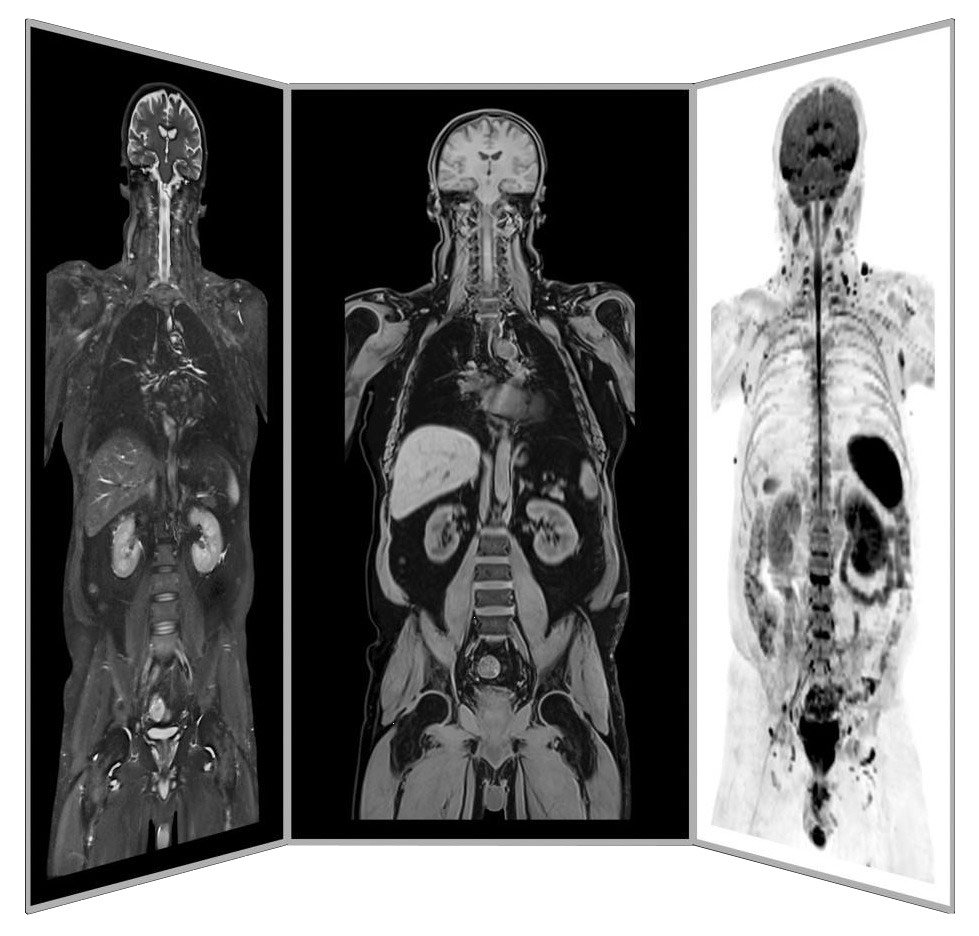
With BMC, an MRI before treatment is not mandatory, but it is often very useful. A standard MRI does not always show where the pain comes from. An arthro-MRI or an MRI with a non-radioactive contrast agent can make inflammation, degeneration and damage in the joint visible, so that BMC can be applied at exactly the right site.
Bone marrow concentrate (BMC)
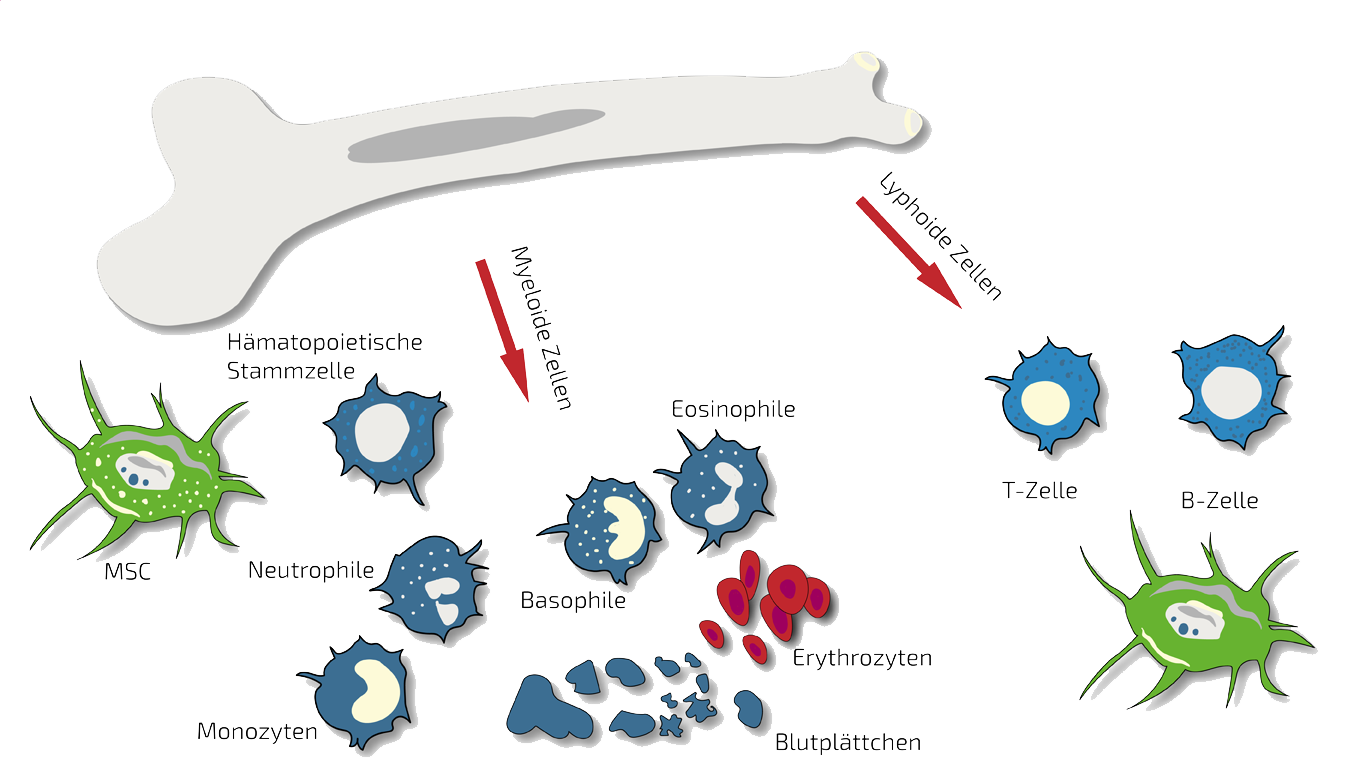
BMC contains your own adult stem cells, haematopoietic and mesenchymal stem cells in their natural composition, together with growth factors. It is collected from the pelvic bone under brief sedation, concentrated, tested and injected on the same day, during a two-day visit. Small external studies reported less pain and better function after bone marrow-derived cells in the knee and shoulder.[3],[4] In a placebo-controlled study in the knee, a benefit over placebo could not yet be demonstrated.[5]
Which joint injuries and conditions do we treat?
BMC may be considered for tears, overuse injuries, inflammation and sports injuries of the following joints, after a diagnostic work-up:
Knee
- Meniscus tear and meniscus damage
- ACL, MCL, PCL or LCL sprain or tear (cruciate and collateral ligaments)
- Cartilage damage and cartilage degeneration after injury
- Patellofemoral syndrome and chondromalacia (softening of the cartilage behind the kneecap)
- Patellar tendinopathy (patellar tendonitis, “jumper’s knee”)
- Hamstring tendinopathy and biceps femoris insertional tendinopathy
- Pes anserine bursitis, Baker’s cyst and similar conditions
- Knee instability after a ligament injury
- Inflammation and swelling after knee surgery
Osteoarthritis of the knee is covered on our osteoarthritis page, and rheumatoid arthritis on our rheumatoid arthritis page.
Shoulder
- Rotator cuff tendinopathy and partial tears
- Impingement and subacromial bursitis
- Biceps tendinopathy
- Labral tears
- Injuries of the acromioclavicular (AC) joint
Osteoarthritis of the shoulder is covered on our osteoarthritis page.
Hip
- Labral tear
- Gluteal tendinopathy and greater trochanteric pain syndrome (trochanteric bursitis)
- Hamstring origin tendinopathy
- Cartilage damage
Osteoarthritis of the hip is covered on our osteoarthritis page.
Elbow
- Tennis elbow (lateral epicondylitis)
- Golfer’s elbow (medial epicondylitis)
- Distal biceps tendinopathy
- Ulnar collateral ligament injury
- Olecranon bursitis
Hand and wrist
- Injuries of the triangular fibrocartilage complex (TFCC)
- De Quervain’s tenosynovitis
- Wrist ligament injuries
Osteoarthritis of the finger joints and of the base of the thumb is covered on our osteoarthritis page, and rheumatoid arthritis of the hand on our rheumatoid arthritis page.
Ankle and foot
- Achilles tendinopathy and partial tears
- Ankle sprain and ligament injuries
- Osteochondral lesions of the talus
- Plantar fasciitis
- Peroneal tendinopathy
Osteoarthritis of the ankle is covered on our osteoarthritis page.
Which diagnostics do we use for joint injuries at ANOVA IRM?
We look for the cause of your pain. We work with the Prof. Dr. Stehling Institut für Bildgebende Diagnostik GmbH, which, like ANOVA IRM, belongs to Dr. Stehling and is located in the same building. There we use precision diagnostics such as arthro-MRI and MRI with non-radioactive contrast agents. Compared with many standard MRIs, these methods can often locate the inflammation, degeneration and damage that cause the pain. This shows us how you should be treated and where BMC should be applied.
Which tests are used to find the cause of joint pain?
We begin with your history and a clinical examination of the injured joint. X-ray shows bone and joint space; MRI shows cartilage, meniscus, ligaments and tendons. An arthro-MRI, in which contrast agent is injected into the joint, shows tears of the meniscus, the labrum or the cartilage more clearly. Blood tests are part of the preparation for treatment; if you wish, they can also look at inflammation markers, hormones and other factors relevant to your case.
What do we review before joint treatment at ANOVA IRM?
Before any treatment decision we review which structure causes your pain and whether inflammation, degeneration or a mechanical problem is the main factor. We also check that you can safely have the brief sedation needed for the bone marrow collection.
With BMC:
- Standard: no MRI required.
- Optional, often useful: an arthro-MRI or an MRI with contrast to locate the source of pain.
- Image-guided application: with ultrasound or CT; CT sometimes in the shoulder and hip, usually not in the knee.
Your doctors at home can carry out these examinations as well; just send us the results. They can also be done in-house; an MRI can often be performed on the day of your on-site appointment. If you would like an independent assessment of existing findings, we also offer a second opinion. Our diagnostics page explains the complete diagnostic pathway.
Why ANOVA IRM for joint injuries?
Dr. mult. Stehling and ANOVA IRM have been treating people with joint and back pain since 2016; 120 people so far. Of these, 17 had a joint or sports injury of the knee, shoulder or hip; we treated the first in 2016 (as of October 2026).
We place BMC precisely where it is needed. Based on the MRI findings, BMC can be injected with imaging support, for example CT, into the joint cavity or at the injured tendon or ligament, at the site where inflammation causes pain. Bone marrow collection takes place under the care of an anaesthesiologist, with the aim of keeping it as pain-free as possible. ANOVA IRM has manufactured BMC in its own facility in Offenbach since 2018; why it requires no marketing authorisation is set out on our regulatory status page.

What can you expect as a patient with a joint injury?
Our patient care managers tell you which information we need in advance, such as MRI, CT or X-ray images, how to transfer large image files, and arrange a counselling appointment with our physicians. The appointment can take place by phone or video if you live outside Germany; the services of the patient care team are free of charge. Treatment itself requires a visit to Offenbach am Main, less than 20 minutes from Frankfurt Airport. You receive an individual written cost estimate before any treatment decision.
Quick answers
Is there a cure for joint injuries and joint degeneration?
Often yes. Many sprains, partial tears and overuse injuries heal with rest, physiotherapy or, where needed, an operation such as a meniscus repair or ligament reconstruction; cartilage wear after an injury, however, does not grow back. BMC at ANOVA IRM is intended to calm inflammation at the injured tendon, ligament or joint and to support healing.
Does stem cell therapy cure joint injuries?
No. Stem cell therapy is not a cure for joint injuries. Injected at a torn tendon or ligament or into an injured joint, BMC is intended to settle the inflammation and the pain it causes, alongside physiotherapy and surgical options.
Is stem cell therapy for joint injuries legal in Germany?
Yes, when the manufacturer is officially authorised. ANOVA IRM holds the authorisations for BMC under Sections 20b and 13 AMG and injects it at injured joints, tendons or ligaments as an individual treatment attempt; our regulatory status page explains the legal basis.
Is stem cell therapy for joint injuries safe?
Not without qualification. An injection at a tendon or into a joint carries risks such as infection or a temporary increase in pain, and your doctor discusses them with you beforehand. BMC uses your own cells, without donor tissue. Manufacture under official authorisation brings additional safety: the competent authority inspects the facility every two years and must be informed of every process change and every new material. Unauthorised providers escape this control. BMC has been made by Dr. mult. Stehling and ANOVA IRM with the same process since 2012. A change in German law led to a pause from 2017, and since 2019 BMC has been manufactured under an authorisation according to Section 13 AMG. Of the 153 people treated with it since then (as of October 2026), none has had a serious adverse event caused by the product. Ask every provider for its authorisations; more under unproven therapies.
What medication is used for joint injuries and joint pain?
After a joint injury, anti-inflammatory pain relievers (NSAIDs) such as ibuprofen are used most often, sometimes together with a cortisone injection at the inflamed tendon or bursa. BMC can be added to this medication; it does not replace it.
Who qualifies, what the process actually involves, and what it costs — step by step.
You are hereJoint Injury Treatment: Eligibility, Process & Cost
In this section you will find everything about treatment for joint injuries of the knee, shoulder and hip at ANOVA IRM: who is eligible, the process step by step and the cost.
What does the joint injury treatment timeline look like?
- 01
Remote assessment
Review of your medical history, current treatment and images by phone or video; usually two weeks to a few months, depending on available appointments.
- 02
Day 1 in Offenbach
Consultation and consent, blood tests and, if you wish, an arthro-MRI or an MRI with contrast.
- 03
Day 2 in Offenbach
Bone marrow collection under brief sedation; BMC is concentrated, tested and injected the same day (about two to four hours).
- 04
Follow-up
Review of your progress by phone or video; a repeat application is possible after assessment.
Who is a candidate for joint injury treatment, and what are the requirements?
BMC may be considered for adults with persistent pain after an injury, overuse or degeneration of a joint, tendon or ligament, after a full diagnostic work-up. Many patients we see have tried rest, physiotherapy, pain medication or injections with limited effect, or want to explore options before surgery. BMC can also be considered after an operation, for example on a ligament or the meniscus, with the aim of supporting healing and the return to sport and everyday activities. The requirements are fitness for a brief sedation, which the bone marrow collection needs, and a visit to Offenbach.
What are the contraindications for joint injury treatment?
Our treatments are experimental. We treat only people for whom, after medical assessment, we consider the benefit-risk balance to support treatment.
Applies to all ANOVA treatments:
- Active cancer within the last two years
- Under the age of legal majority
- Pregnancy or breastfeeding
- Active infectious disease (hepatitis A, B, C, HIV, syphilis or other)
Specific to joint injuries:
- Infection of the joint or of the skin at the injection site
- Unable to breathe unaided, or difficulty breathing in the supine position (sedation for the bone marrow collection)
- Psychiatric disorder that would prevent informed consent or cooperation
A blood clotting disorder or blood-thinning medication is not a contraindication, but please tell us about it before your visit.
What does joint injury therapy at ANOVA IRM involve, step by step?
For a joint injury, treatment runs through several stages. We start with your history, your previous treatment and a first view on whether BMC may be useful. Next come the examinations, a discussion of the options, from physiotherapy to surgery, and a written plan with cost estimate. Last are the bone marrow collection, the preparation and testing of BMC and the injection.
What screening is needed before you travel for joint treatment?
A blood test in your home country, for infections and other reasons that would rule out treatment, saves you a journey in vain. Please send it to us together with your MRI images and recent doctors’ letters.
What happens at your visit to Offenbach for a joint injury?
Your stay in Offenbach lasts two days and you can go home in between. Day one brings the consultation, your consent, blood tests and, if you wish, an arthro-MRI. On day two, bone marrow is collected from the pelvic bone under brief sedation, and BMC is injected at the injured joint, tendon or ligament the same afternoon.
How is your BMC produced and quality-controlled?
Your BMC is produced on the day of collection in our facility in Offenbach, under a manufacturing authorisation (Section 13 AMG) and good manufacturing practice (GMP). Before the injection, the most important quality tests have already been completed; the remaining tests follow later.
How is BMC applied in joint injuries?
For a joint injury, one application of BMC during a two-day visit is usually enough; if symptoms persist or return, a second treatment can be considered. The schedule is set individually for each patient, for example:
- One application on day two of the visit; a second treatment after assessment requires a new bone marrow collection.
- If several joints or tendons are injured, they can be treated during the same visit, usually with a double BMC.
- Route: into the affected joint (intra-articular) or directly at the injured tendon or ligament, so that BMC reaches the inflamed tissue.
- Image guidance: with ultrasound or CT; CT sometimes in the shoulder and hip, and usually not needed in the knee.
- BMC is only applied locally, never into a vein.
What does joint injury treatment with BMC cost?
BMC treatment for joint injuries costs approximately €8,000 to €9,000 and is billed according to the German Medical Fee Schedule (GOÄ). A CT-guided injection brings the cost closer to €9,000, an injection without CT closer to €8,000; CT is usually not needed in the knee and sometimes used in the shoulder and hip. An arthro-MRI and your sedation preferences also play a part. Treating several joints or tendons in one visit usually means a double BMC at a correspondingly higher cost. You receive a written estimate before you decide. Our blog post on treatment cost explains the main cost factors of stem cell treatment. Travel and accommodation are not included. All prices are subject to change.
How does the cost of joint injury treatment vary with the application route?
All treatments at ANOVA IRM are billed according to the German Medical Fee Schedule (Gebührenordnung für Ärzte, GOÄ). For joint injuries, BMC is injected into the joint or at the tendon or ligament. The cost depends above all on whether ultrasound or CT guides the injection, on the number of sites treated and on any MRI beforehand.
Frequently asked questions — eligibility, process and travel
How is BMC administered for joint injuries?
By injection into the affected joint (intra-articular) or directly at the injured tendon or ligament, guided by ultrasound or CT where useful. The injection follows the bone marrow collection on the same day, on day two of your stay in Offenbach.
How long does the whole joint injury process take?
Usually two weeks to a few months from your first enquiry, depending on when your images and appointments are available; you only travel for the treatment itself, which takes two days in Offenbach.
Does health insurance cover stem cell therapy for joint injuries in Germany?
No. For sports and joint injuries, BMC is an experimental treatment that health insurers do not usually cover, so you pay for it yourself. Asking your insurer for an individual decision is still possible.
Should I stop my current joint pain medication such as ibuprofen or diclofenac?
No. Please continue your medication as agreed with your treating doctor.
Should I continue my existing joint injury treatment such as physiotherapy?
Yes. Physiotherapy and stabilising exercises help the injured joint, tendon or ligament to recover and remain important after BMC. We coordinate with your orthopaedic surgeon or sports physician where you wish.
How often do I need to travel to Germany for stem cell treatment of a joint injury?
Once in most cases: for a joint, tendon or ligament injury you stay two days in Offenbach, less than 20 minutes from Frankfurt Airport, for the bone marrow collection and the injection. How the visit runs is described step by step on our BMC page.
What medical records should I send for a joint injury assessment?
Please send us your most recent documents; we will ask if we need anything else. Helpful are, for example, MRI or arthro-MRI images of the injured joint, operation reports, physiotherapy notes and your current medication. Our patient care managers help you upload large image files.
Does ANOVA IRM treat international patients with joint injuries?
Yes. Athletes and other patients from abroad with joint, tendon or ligament injuries are advised in English; the first assessment takes place by video or phone.
How joint injuries develop, the standard of care, the rationale for BMC and all references.
You are hereJoint Injuries: Clinical & Scientific Evidence
What happens in joint injuries and joint degeneration?
After an injury, the damaged tissue reacts with inflammation. In tissues with a poor blood supply, such as cartilage, the meniscus, ligaments and tendons, repair is often slow and incomplete. Typical forms are cartilage defects, meniscus tears and ligament injuries; repeated strain can add tendinopathies and bursitis.
Degeneration of the spine differs from joint injuries: it affects a chain of structures at once — disc, vertebral endplates, facet joints, ligaments and nerve roots. It is described on our spine page.
What causes joint injuries, and what are the risk factors?
Joint injuries are caused by sudden forces, such as a twist or a fall, by repeated overload in sport or work, or by gradual wear. The main risk factors are:
- Accidents and falls
- Overuse or incorrect loading at work or in sport, especially in sports with quick turns
- Older age
- Low fitness and weak muscles
- An earlier injury of the same joint
What drives the progression of joint injuries?
Whether an injury heals or becomes chronic depends less on its cause than on what follows. Persistent inflammation, an unstable joint after a ligament tear and continued strain keep the tissue from healing. Over 10 to 20 years, about half of patients with a cruciate ligament or meniscus injury develop osteoarthritis of the knee.[2] Our programme is aimed at this inflammation and its course, not at the original injury.

What is the standard of care for joint injuries?
Treatment starts with rest, physiotherapy and pain medication. Injections of cortisone into the joint relieve pain quickly, but usually for no longer than a few weeks. In an external two-year randomised study in knee osteoarthritis, repeated cortisone injections led to more cartilage loss than saline, without less pain.[6] Hyaluronic acid can improve lubrication of the joint. Surgical options include arthroscopy, meniscus repair or partial removal, ligament reconstruction, microfracture of the cartilage and, in advanced osteoarthritis, joint replacement.
Partial tears of a cruciate ligament often heal with physiotherapy alone. A complete tear of the anterior cruciate ligament is usually operated on in active people and treated conservatively in less active people; a posterior cruciate ligament tear is operated on only in specialised centres. Rehabilitation after a cruciate ligament injury takes six to twelve months of intensive physiotherapy.
Important: Physiotherapy, surgery and the other options described here are the established standard of care for joint injuries. Our BMC programme complements them and does not replace appropriate established treatment.
Physiotherapy and stabilising exercises are part of every treatment plan after a joint injury. Advice on exercise, weight and nutrition, and on the early detection of osteoarthritis, is collected on our osteoarthritis page.
What if surgery or a joint replacement is being considered?
Knee operations and other joint surgery should be considered after a careful review of the diagnostic findings, the conventional options and treatment with stem cells. In an external randomised study, total knee replacement followed by non-surgical treatment led to greater improvement than non-surgical treatment alone, but also to more serious adverse events.[7] A considerable proportion of patients still have persistent pain after a joint replacement.[8] Stem cell therapy is therefore an option some patients consider before joint replacement.
How are joint injuries diagnosed, and what do we not do ourselves?
Joint injuries are diagnosed from the history, a physical examination and imaging. Physiotherapy, arthroscopy and joint surgery stay with your treating doctors and specialists. We carry out MRI, arthro-MRI and CT ourselves at the Institut für Bildgebende Diagnostik in the same building.
What is the scientific rationale for BMC in joint injuries?
Bone marrow concentrate (BMC)
ANOVA IRM has not yet tested BMC for joint injuries in a clinical study. In an external registry of patients with knee osteoarthritis treated with bone marrow concentrate, pain and function improved, without a control group.[3] In an external case-controlled study of 90 patients, rotator cuff repairs augmented with bone marrow-derived cells all healed within six months, compared with 67% without; after ten years, 87% versus 44% were still intact.[4] In a small external placebo-controlled study in 25 patients with knee osteoarthritis, both knees improved, and a benefit over saline could not yet be demonstrated.[5] To our knowledge, there is no phase 3 study of BMC in joint injuries.
What is the efficacy hypothesis behind BMC in joint injuries?
Stem cells can communicate with the immune cells that drive inflammation and are thought to dampen this over-reaction. Laboratory and preclinical studies investigate whether they also stimulate tissue repair and counteract the loss of cartilage. Injected into the joint or at the tendon, BMC is intended to reduce inflammation and pain first. When the joint returns to a resting phase, repair of cartilage and partially torn tendons and ligaments may follow, supported by physiotherapy.
Mesenchymal stem cells — analogous evidence
Studies with cultured mesenchymal stem cells, a different product from BMC, point in the same direction. In a small external phase 1/2 study after partial meniscus removal, an injection of donor mesenchymal stem cells was followed by meniscus regrowth in some patients and by less pain.[9] In a further small external phase 1/2 study, mesenchymal stem cells injected into knees with osteoarthritis improved function and reduced cartilage defects.[10]
Ask us about new developments in BMC treatment for joint and sports injuries.
Where does our own joint injury evidence stand?
For joint injuries, there is no evaluated dataset of our own yet. We observe that pain eases more often when inflammation is behind it, for example in an irritated tendon or an inflamed joint lining. Stem cells cannot cure a condition such as osteoarthritis, and every improvement remains limited in time. This is experience, not a systematic evaluation, and it does not predict your result.
Reports of individual patients are collected on our testimonials page; they describe single cases.
What the published joint injury evidence does not yet tell us
- Studies of bone marrow cells in tendon, ligament and cartilage injuries are few and mostly small.
- The cell products tested differed from BMC at ANOVA IRM in how they were obtained and dosed.
- No stem cell-based treatment of joint injuries has become an approved standard treatment in Germany or the EU.
Legal framework for BMC in joint injuries
The BMC we inject at injured joints, tendons and ligaments is an advanced therapy medicinal product. The Hessian State Office for Health and Care (HLfGP) granted ANOVA IRM a procurement authorisation (Section 20b AMG) and a manufacturing authorisation (Section 13 AMG) for it and inspects the facility regularly. The application is an individual treatment attempt (individueller Heilversuch), which requires full disclosure and your informed consent. No authorisation under Section 4b, no marketing authorisation under Section 21 and no approval under Section 21a AMG is needed, as BMC is used only for our own patients; see our regulatory status page.
Frequently asked questions — joint injuries, evidence and approval status
Is stem cell therapy approved for joint injuries anywhere?
No. For joint, tendon and ligament injuries, no stem cell therapy is approved in Germany, the EU or the US. At ANOVA IRM, BMC is given as an individual treatment attempt; the international situation is summarised on our joint and back pain page.
Is success guaranteed with stem cell treatment for a joint injury?
No. How an injured tendon, ligament or joint responds to BMC differs from person to person. Your doctor recommends treatment only if, in your case, the possible benefit outweighs the risks.
What is the meniscus?
The meniscus is a crescent-shaped piece of cartilage in the knee, one on the inner and one on the outer side. It acts as a shock absorber, helps to stabilise the joint and shields the ends of the bones from wear.
What causes a meniscus tear, and how does it feel?
Often a strong twist of the knee, for example a quick turn with the foot planted in football, tennis or jogging, is enough. In younger people it is usually a sports injury; symptoms that increase gradually suggest wear. Sometimes a torn piece comes loose and blocks the knee joint.
A meniscus tear causes pain, swelling and stiffness of the knee, sometimes with locking, clicking or a feeling of instability. An injury of the inner meniscus hurts more with rotation or deep bending; an injury of the outer meniscus is often tender to pressure.
What are the knee ligaments?
The knee has to withstand forces from many directions, and four main ligaments stabilise it:
- Anterior cruciate ligament (ACL): in the centre of the knee; controls rotation and the forward movement of the shin bone (tibia).
- Posterior cruciate ligament (PCL): in the back of the knee; controls the backward movement of the shin bone.
- Medial collateral ligament (MCL): on the inner side of the knee; stabilises the inner knee.
- Lateral collateral ligament (LCL): on the outer side of the knee; stabilises the outer knee.
What is an anterior cruciate ligament (ACL) tear?
An ACL tear is a partial or complete tear of the anterior cruciate ligament, which runs through the centre of the knee and stabilises it together with the posterior cruciate ligament and the collateral ligaments. It typically occurs in sports with quick changes of direction, such as football or basketball, and in skiing falls with a twist.
Typical signs are sudden pain, marked swelling and a knee that can no longer bear weight. A doctor tests stability with the Lachman test; an MRI shows whether the ligament is overstretched, partly torn or completely torn. Strong muscles can mask the instability, so a tear sometimes remains undetected for months.
How does cortisone work in joint injuries?
Cortisone dampens inflammation, so an injection at an inflamed tendon, bursa or joint often relieves pain quickly, but only for a limited time. Repeated injections into the knee caused more cartilage loss than saline in a two-year study.[6]
When is a joint replacement needed after a joint injury?
Usually not after tendon or ligament injuries. Severe meniscus damage is sometimes treated with a meniscus implant, usually a resorbable collagen scaffold into which the body’s own cells grow; recovery takes about six months. In advanced osteoarthritis, a joint replacement is an established option; how long prostheses last is described on our osteoarthritis page.
Can a preventive MRI help to avoid serious joint damage?
It can help. Without radiation, an MRI can show early cartilage damage, osteoarthritis and tears of tendons, ligaments or the joint capsule, so that countermeasures can start early. Preventive MRI is usually not covered by health insurance; we advise you on whether it is useful in your case, see our diagnostics page.
What are NSAID, NSAP and NSAR, used for joint injuries?
NSAID, NSAP and NSAR are names for the same group of anti-inflammatory pain relievers that are often taken after sprains, tears and tendon problems. Unlike cortisone, they are not steroids. Used for a long time, they can damage the stomach and bowel, the kidneys or the heart.
- NSAID: non-steroidal anti-inflammatory drug
- NSAP: non-steroidal anti-inflammatory product (German usage)
- NSAR: nichtsteroidales Antirheumatikum (German for non-steroidal anti-rheumatic drug)
Which anti-phlogistic drugs are used for joint injuries?
Anti-phlogistic means anti-inflammatory. After joint injuries, mainly the first two of these groups are used; the others belong to the treatment of inflammatory rheumatic diseases:
- Glucocorticoids (for example cortisone)
- Non-steroidal anti-inflammatory drugs (NSAIDs, non-steroidal anti-rheumatic drugs)
- Disease-modifying anti-rheumatic drugs (DMARDs), including immunosuppressants
- Biologic drugs and targeted small molecules such as JAK inhibitors
What type of stem cell therapy does ANOVA use for joint injuries?
For injuries of joints, tendons and ligaments we use bone marrow concentrate (BMC), collected from your pelvic bone and concentrated on the same day; it contains your own stem cells and growth factors. See our BMC page.
How common are joint injuries and joint pain?
Very common. About a quarter of adults over 55 have persistent knee pain, and around one in six of them is disabled by it.[1] Sports injuries of the knee, shoulder and ankle are among the most frequent reasons for orthopaedic consultations.
What are the symptoms of joint injuries?
The main symptoms are pain, swelling and restricted movement of the affected joint. They differ with the injured structure:
- Pain on movement or under load, and pain at rest when inflammation is active
- Swelling, warmth or fluid in the injured joint
- Locking or catching of the knee, often with a meniscus tear
- A feeling of instability or giving way, often with a ligament injury
- Pain at a tendon attachment on use, typical of tendinopathies such as tennis elbow
Which forms of joint injuries are there, and how do they progress?
Joint injuries are classified by their cause and the structure affected. The course depends on the cause and on how well the tissue heals.
- Acute injuries: for example meniscus or ligament tears after a twist or fall; may heal or remain unstable.
- Overuse injuries: tendinopathies and bursitis from repeated strain; often heal slowly and recur.
- Degenerative changes: cartilage wear and degenerative meniscus tears; usually progress slowly.
- Post-traumatic osteoarthritis: develops years after ligament or meniscus injuries in many patients.
What complications can joint injuries cause?
Persistent instability, chronic pain and reduced mobility are possible. After injuries of the cruciate ligament or the meniscus, about half of patients develop osteoarthritis of the knee within 10 to 20 years.[2]
Important Pages
Questions people usually ask next. Each is answered in full on its own page.
Affiliations of ANOVA
ANOVA IRM shares its premises in Offenbach with two further institutions owned by Dr. Stehling: the Institut für Bildgebende Diagnostik (IBDO), providing MRI and CT imaging, and the VITUS PRIVATKLINIK Prof. Dr. Stehling GmbH. Because imaging is carried out in the same building, arthro-MRI, MRI with contrast and CT-guided injections at tendons and joints can be performed in-house. See diagnostics at ANOVA IRM.
References — joint injury literature
General literature on joint and back pain is maintained on the pillar page, on osteoarthritis on the osteoarthritis page and on bone marrow on the BMC page.
Joint injuries — frequency and course
- [1] Peat G, McCarney R, Croft P. Knee pain and osteoarthritis in older adults: a review of community burden and current use of primary health care. Ann Rheum Dis. 2001;60(2):91–97. doi:10.1136/ard.60.2.91. PMID: 11156538.
- [2] Lohmander LS, Englund PM, Dahl LL, et al. The long-term consequence of anterior cruciate ligament and meniscus injuries: osteoarthritis. Am J Sports Med. 2007;35(10):1756–1769. doi:10.1177/0363546507307396. PMID: 17761605.
Bone marrow concentrate in joints and tendons
- [3] Centeno C, Pitts J, Al-Sayegh H, et al. Efficacy of autologous bone marrow concentrate for knee osteoarthritis with and without adipose graft. Biomed Res Int. 2014;2014:370621. doi:10.1155/2014/370621. PMID: 25276781.
- [4] Hernigou P, Flouzat Lachaniette CH, Delambre J, et al. Biologic augmentation of rotator cuff repair with mesenchymal stem cells during arthroscopy improves healing and prevents further tears: a case-controlled study. Int Orthop. 2014;38(9):1811–1818. doi:10.1007/s00264-014-2391-1. PMID: 24913770.
- [5] Shapiro SA, Kazmerchak SE, Heckman MG, et al. A prospective, single-blind, placebo-controlled trial of bone marrow aspirate concentrate for knee osteoarthritis. Am J Sports Med. 2017;45(1):82–90. doi:10.1177/0363546516662455. PMID: 27566242.
Standard of care: cortisone and joint replacement
- [6] McAlindon TE, LaValley MP, Harvey WF, et al. Effect of intra-articular triamcinolone vs saline on knee cartilage volume and pain in patients with knee osteoarthritis: a randomized clinical trial. JAMA. 2017;317(19):1967–1975. doi:10.1001/jama.2017.5283. PMID: 28510679.
- [7] Skou ST, Roos EM, Laursen MB, et al. A randomized, controlled trial of total knee replacement. N Engl J Med. 2015;373(17):1597–1606. doi:10.1056/NEJMoa1505467. PMID: 26488691.
- [8] Wylde V, Hewlett S, Learmonth ID, et al. Persistent pain after joint replacement: prevalence, sensory qualities, and postoperative determinants. Pain. 2011;152(3):566–572. doi:10.1016/j.pain.2010.11.023. PMID: 21239114.
Mesenchymal stem cells — analogous evidence, not BMC itself
- [9] Vangsness CT Jr, Farr J 2nd, Boyd J, et al. Adult human mesenchymal stem cells delivered via intra-articular injection to the knee following partial medial meniscectomy: a randomized, double-blind, controlled study. J Bone Joint Surg Am. 2014;96(2):90–98. doi:10.2106/JBJS.M.00058. PMID: 24430407.
- [10] Jo CH, Lee YG, Shin WH, et al. Intra-articular injection of mesenchymal stem cells for the treatment of osteoarthritis of the knee: a proof-of-concept clinical trial. Stem Cells. 2014;32(5):1254–1266. doi:10.1002/stem.1634. PMID: 24449146.